A useful home practice area starts with the shots you want to improve, not the biggest equipment bundle. Thrill Golf can help you compare equipment, but your available space, practice goals and household constraints should determine what you buy. A putting strip may be the right choice for an apartment, while a suitable garage or backyard could accommodate a hitting mat and practice net.
The aim is to build a setup you can use safely and consistently. That means checking clearance before ordering, matching the equipment to your intended shots and leaving room for storage. Start with one practice goal, buy the essentials for it and add technology only when it solves a specific problem. This guide walks through those decisions in the order that prevents wasted purchases.
Plan Your Thrill Golf Setup Around the Available Space
Measure the usable area, not just the room’s overall dimensions. Shelving, garage-door tracks, light fixtures and stored equipment can make an apparently spacious room unsuitable for swinging a club. Outdoors, consider nearby windows, neighboring property and the area beyond the proposed net.
Check the complete swing envelope, including your backswing and follow-through. The longest club you intend to use needs clearance above, behind and beside you. If both right-handed and left-handed golfers will practice, assess both positions.
Before using Thrill Golf to shortlist equipment, record these practical constraints:
- Usable width, depth and height: Measure around obstacles rather than assuming the entire space is available.
- Hitting position: Include the stance area, mat and required distance to the net.
- Ball containment: Account for high shots, sideways misses and possible rebounds.
- Access and storage: Keep doors, walkways and emergency exits clear.
- Household impact: Consider impact noise, shared walls and how quickly the area must pack away.
There is no universal room size that makes every setup safe. Follow the specific equipment’s installation requirements and confirm swing clearance without hitting balls. Only attempt slow rehearsal swings after measurements show adequate room. If clearance is doubtful, choose putting practice rather than forcing a full-swing station into the space.
Choose One Practice Goal Before Buying
A useful setup should solve a recognizable problem: inconsistent contact, poor starting direction on putts or difficulty maintaining a practice habit. Trying to cover every part of the game immediately usually adds expense and complexity.
Use this framework to identify your first purchase category:
| Main practice goal | Starting equipment | What you can work on | Main limitation |
|---|---|---|---|
| Putting start line | Putting surface and a simple target gate | Face alignment and starting direction | Does not reproduce outdoor breaks |
| Putting distance control | A longer putting surface with distance markers | Repeatable pace on that surface | Speed may differ from course greens |
| Full-swing contact | Suitable net, hitting mat and impact feedback | Strike location and setup consistency | A net alone does not reveal ball flight |
| Measured shot practice | Safe hitting station and compatible launch monitor | Supported ball-flight measurements | Requires additional space and careful setup |
When researching through Thrill Golf, judge equipment against your chosen task rather than the number of advertised features. A basic station that supports frequent, focused practice can be more useful than a complex installation you rarely assemble.
Putting is also a reasonable starting point when full swings are not possible. You can develop a repeatable routine and test whether you actually enjoy practicing at home before committing more space or money.
Choose Ball Containment Before Accessories
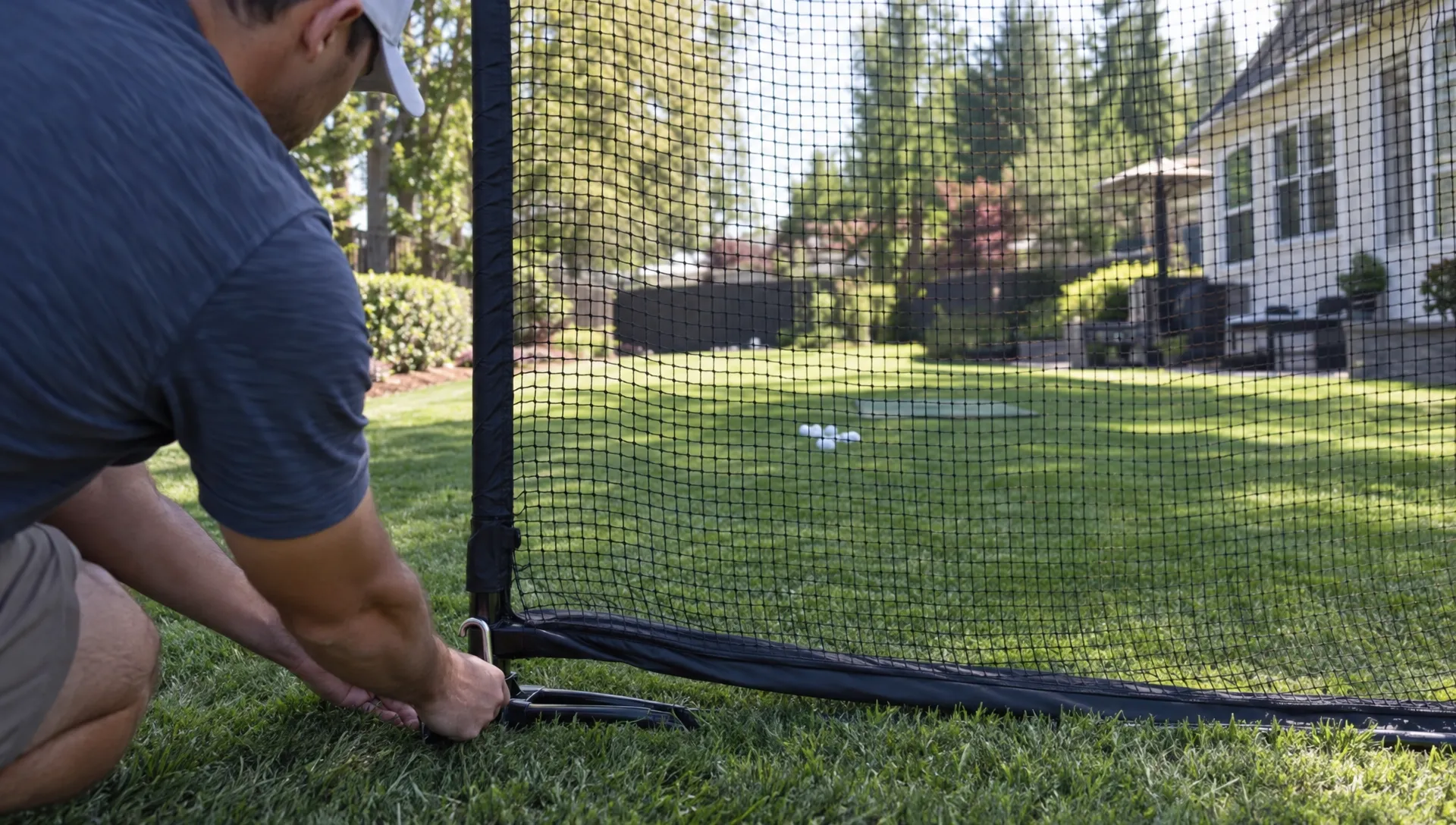
For full-swing practice, the net or enclosure is a foundational purchase. It must be intended for your ball type and planned use, with enough coverage for realistic mishits. A small central target does not compensate for inadequate containment around it.
Check the manufacturer’s requirements for hitting distance, installation, anchoring and clearance behind the net. Some designs need space to absorb impact. Placing them against a hard wall can affect how they work and increase rebound risk.
For outdoor installations, the guide to compact practice nets for small yards can help you compare space-saving approaches. Treat compactness as one factor, not proof that a net suits your yard.
Thrill Golf comparisons are useful for narrowing options, but the selected model’s instructions should govern installation. Assess high and sideways misses, not just a well-struck shot aimed at the center. Additional protection cannot make an unsuitable hitting area safe.
Inspect mesh, seams, attachment points and the frame regularly. Stop using the net if you find damage. Keep people and pets away from the hitting area and anywhere an escaped ball could travel.
Match the Hitting Mat to the Surface and Your Stance
A hitting mat is both a striking surface and part of your stance platform. It needs to remain stable during the swing and sit securely on the floor beneath it.
Look beyond turf thickness. Check the total footprint, whether the base slides on your intended surface and how the hitting section is supported. If you stand beside a raised hitting strip, the ball may sit above your feet. That changes the practice conditions and can affect setup.
When comparing mats on Thrill Golf, prioritize a stable, practical arrangement over a feature list. A replaceable hitting insert may be useful, but only if its dimensions, attachment method and replacement availability suit your needs. Follow the manufacturer’s requirements for any supporting surface or underlay.
For a garage installation, the garage hitting mat buying guide provides a more focused starting point.
Synthetic turf can also make a slightly heavy strike feel more successful than it would from grass. Use suitable impact feedback to check contact rather than judging every shot by feel alone. Stop if practice causes wrist, elbow or other pain, and reassess the surface, technique and workload before continuing.
Give Putting Practice a Separate, Usable Area
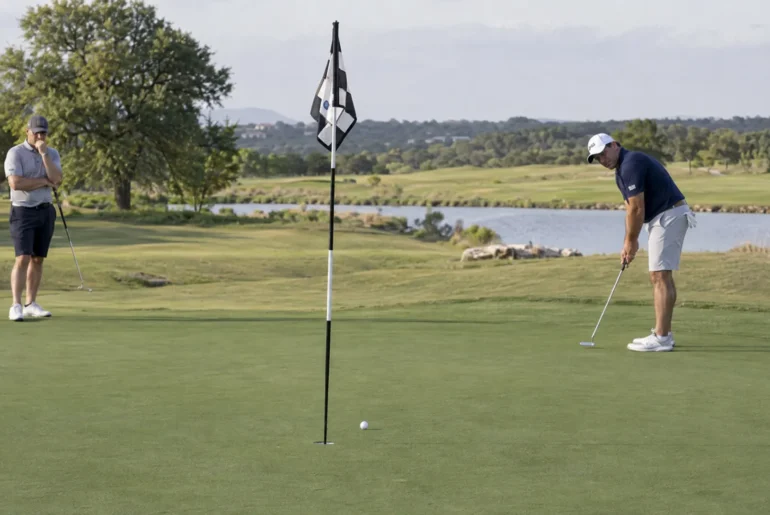
A putting surface does not need to share the hitting station’s footprint. Keeping it separate can make short sessions easier, especially when the net is folded away or the garage is serving another purpose.
Choose the surface around the distances you can actually practice. Consider usable rolling length, how flat it lies and whether it can remain installed. A raised return ramp is convenient, but finishing putts uphill is a different task from controlling pace on a level surface.
Use Thrill Golf to compare putting options by their practice value, not just their appearance. The guide to choosing an indoor putting green for home can help you examine the category in more detail.
Mark a few starting positions and use a simple gate to test starting direction. For pace practice, select a stopping zone rather than always putting toward a cup. Home practice can build consistency, but it does not replace reading slopes or adjusting to changing green speeds outdoors.
Add Measurement Only When It Answers a Question
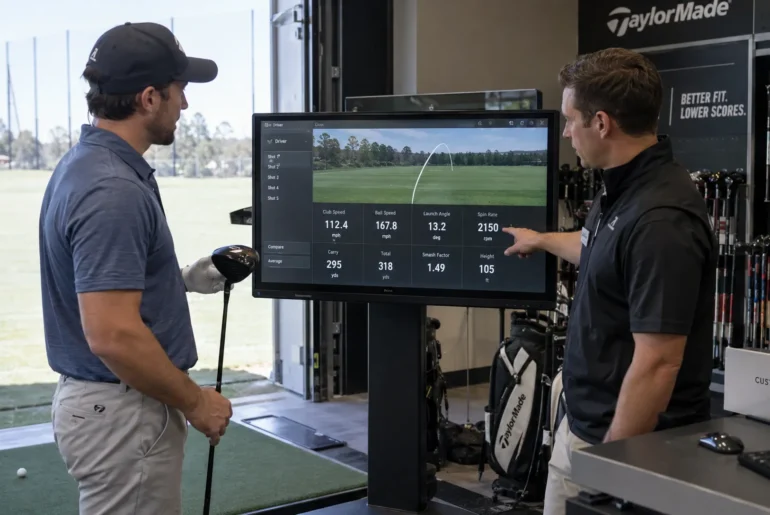
A launch monitor is optional. Before buying one, decide what you need to learn: carry distance, ball speed, launch conditions or another measurement the device actually supports.
Different systems have different placement and space requirements. Check the manufacturer’s indoor requirements, ball compatibility and distance needed around the hitting position. Confirm which readings are measured, which are estimated and whether desired functions require additional software or a subscription.
As you research technology with Thrill Golf, keep the existing station’s dimensions beside you. A device is not a suitable upgrade if its operating requirements exceed the available space.
Lower-cost feedback can still be useful. Impact tape or a suitable face-marking product can reveal strike location, while a practice log can track results from repeatable drills. Without ball-flight measurement, do not assume that solid-feeling contact means the shot would finish on target.
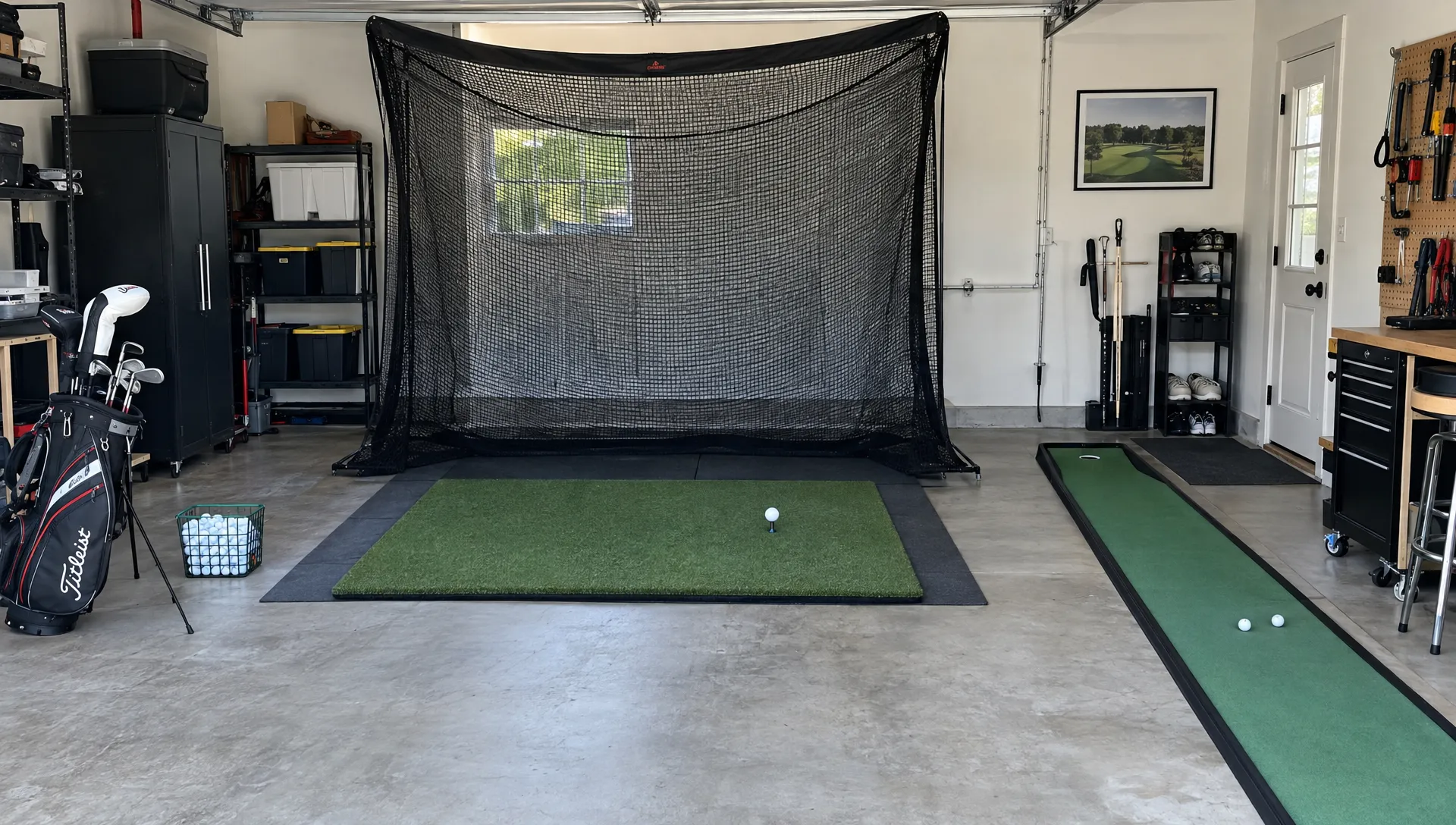
Commission the Setup Before a Full Practice Session
Treat the first use as an installation check, not an opportunity to hit every club in the bag. Confirm that the mat stays in place, the net is assembled and anchored as instructed and the hitting position matches the manufacturer’s guidance.
Make slow rehearsal swings without a ball after verifying clearance. Then, where the equipment’s instructions permit, begin with gentle shots from the prescribed position. Increase intensity only after confirming containment and rebound behavior. Recheck clearance before changing to a longer club.
Thrill Golf can help you plan the equipment combination, but the final safety check must happen in your actual space. A product photograph cannot reveal your ceiling obstruction, slippery floor or exposed window.
Stop if balls escape, rebounds reach the golfer or anything shifts during impact. Do not solve a containment problem by simply promising to hit straighter. Adjust the installation according to its instructions or restrict the station to a safer activity.
For outdoor equipment, follow weather and wind limitations. Never leave a temporary net installed beyond the conditions its manufacturer permits.
Build a Repeatable Practice Routine
Keep the first sessions short and focused. A sample 20-minute session could include five minutes of putting start-line work, ten minutes of contact practice and five minutes repeating the weaker task. These are suggested practice blocks, not a required schedule.
Choose one result to record. For putting, count successful starts through a gate. For contact practice, record how often strikes land within your chosen area of the clubface. Keep the conditions consistent enough that results are comparable.
Once your Thrill Golf research has helped you build the station, let those results guide upgrades. Buy a longer putting surface if short putts no longer address your goal. Consider measurement technology when a specific ball-flight question is limiting your practice.
Include a brief equipment inspection in each session. Store balls, clubs and accessories afterward so the next session starts easily and the room remains usable.
Frequently Asked Questions
What should I buy first for a home golf practice setup? Choose your practice goal first. For putting, start with a suitable rolling surface. For full swings, establish safe clearance and ball containment before selecting the mat and accessories. Do not buy a launch monitor before confirming that its space requirements fit.
Can I practice full swings in a small garage? Only if the complete swing, hitting position and equipment installation requirements fit safely. Ceiling height alone is not enough. Door tracks, shelving and lateral clearance matter. If the space is unsuitable, use it for putting instead.
Do I need a golf simulator to improve at home? No. Putting drills and contact feedback can support useful practice without a simulator. A compatible launch monitor becomes more valuable when you need reliable measurements that your basic station cannot provide.
Can foam balls make any room safe for golf practice? No. Reduced-flight balls do not eliminate the risk of striking furniture, fixtures or people with a club. Check swing clearance and follow the equipment’s ball-type requirements regardless of the ball you use.
Start With the Setup You Will Actually Use
Measure your space, select one practice goal and identify the essentials that support it. Then explore Thrill Golf’s equipment guides and practice resources to compare your options. Build the smallest setup that meets your needs safely, establish a routine and expand only when you have a clear reason.