
A useful golf blog should help you decide what to practice, not leave you juggling five different swing thoughts. The right resource can give you a measurable drill, explain a recurring miss or help you choose equipment that makes home practice more productive.
These seven resources serve different purposes, from improving contact to managing your way around the course. Some are specialist blogs and others are larger golf publications with substantial instruction libraries. Choose the one that matches your current problem, then turn one idea into a repeatable practice task.
Start with a problem, not another swing tip
Before opening an instruction article, identify what is actually costing you shots. “I need a better swing” is too broad. “I regularly hit my irons heavy” or “I leave long putts short” gives you something specific to work on.
Use your recent rounds to separate technique problems from decision-making problems. A penalty after aiming at a narrow landing area may call for a safer target, not a driver swing rebuild. Likewise, inconsistent wedge distances need a different practice session from poor contact.
Look for advice that includes a clear task, a way to measure it and an explanation of who it suits. Be cautious about universal fixes based on one symptom. Similar-looking misses can have different causes, and an article cannot assess your movement the way an in-person coach can.
7 golf blog resources to help you practice smarter
The resources below are organized by their most useful role in a practice routine, rather than ranked from best to worst. Equipment coverage belongs here too, but only when it helps you solve a defined problem rather than shop for a shortcut.
| Resource | Most useful for | A practical starting point |
|---|---|---|
| Practical Golf | Scoring and course management | Review costly decisions from your last round |
| Adam Young Golf | Strike and skill development | Measure contact with one club |
| Golf Insider UK | Structured drills | Choose a drill with a scoring system |
| GolfWRX | Equipment and fitting context | Investigate one specific equipment question |
| MyGolfSpy | Equipment testing and buying research | Compare relevant testing criteria |
| GOLF | Instruction from multiple teachers | Find guidance for one recurring miss |
| Golf Monthly | Short-game and general instruction | Build a repeatable wedge or putting task |
1. Practical Golf: connect practice to lower scores
Practical Golf, founded by Jon Sherman, is a useful starting point for golfers who want their range work to translate into better decisions and fewer wasted shots. Its coverage includes practice, strategy and the mental side of playing.
Use it when you are making solid contact in practice but struggling to score on the course. Rather than immediately changing your mechanics, look at target selection, expectations and how you respond to mistakes.
Put it into practice: Review your last round and identify three costly decisions. Separate those from execution errors. Choosing an unnecessarily risky recovery shot is a decision; missing a sensible target is an execution issue. Then build one range task around the most common execution problem.
This golf blog is especially useful for keeping improvement focused on scoring rather than appearance. Its strategy content can help you question whether the shot you are practicing is one you should attempt during a round.
2. Adam Young Golf: improve strike through skill-based practice
Adam Young Golf focuses heavily on impact, ball striking and how golfers develop skills. It is worth exploring if you have accumulated plenty of technical knowledge without becoming more consistent.
A useful distinction here is between understanding a movement and being able to produce the intended impact. You can know what a good swing is supposed to look like and still struggle to control where the club meets the ball or ground.
Put it into practice: With one mid-iron, record the strike location of ten shots using a suitable clubface impact product. Work on one contact intention, then repeat the same ten-shot test. Compare the pattern rather than judging the session by your single best shot.
Treat this golf blog as a resource for designing skill experiments, not collecting more positions to copy. Keep the task manageable, and use professional coaching when you cannot identify why your contact pattern persists. A strike measurement shows what happened, but does not always explain the cause.
3. Golf Insider UK: give your practice session a structure
Golf Insider UK offers instruction and practice guidance across the long game, short game and putting. Its drill-focused content is a useful fit for golfers who arrive at the practice area without a clear plan.
The most valuable drill is one you can repeat under comparable conditions. A session that simply feels better is difficult to evaluate. A task with a defined distance, target and score gives you a baseline for next time.
Put it into practice: Choose a putting drill that measures either start line or distance control. Record the distance, number of attempts and outcome. Retest before changing the task so you can distinguish progress from a particularly good afternoon.
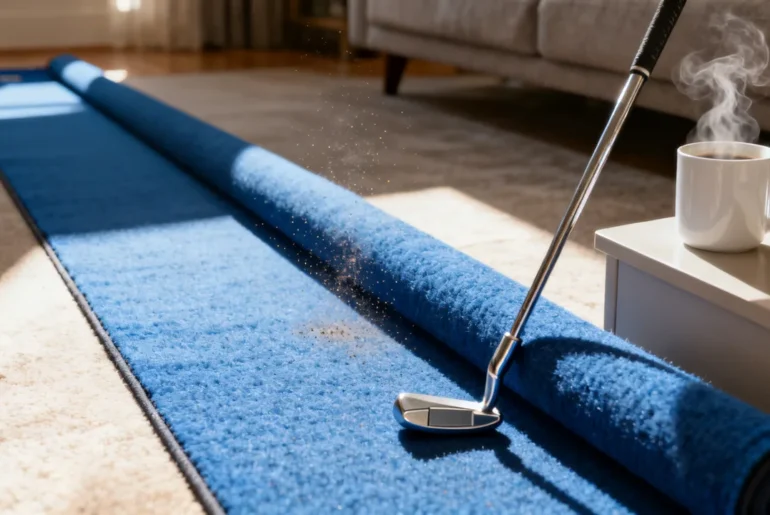
If you practice indoors, Thrill Golf’s guide to choosing an indoor putting green for home can help you evaluate your setup. This golf blog resource is most useful when you keep the practice conditions consistent, while recognizing that a home surface cannot reproduce every green speed or slope.
4. GolfWRX: understand equipment without copying a tour bag
GolfWRX combines equipment coverage, instruction and community discussion. It is useful when you need context for a fitting question or want to understand how club specifications can affect your options.
Start with a specific question: Are your carry-distance gaps usable? Does a particular wedge suit the lies you face? Are you comparing clubs with equivalent lofts? These questions are more productive than assuming a tour player's setup will work for you.
Put it into practice: Measure the carry distances of adjacent clubs under reasonably consistent conditions. Record typical results and the spread, not just the longest shot. If two clubs repeatedly serve the same distance, take that information to a fitter before deciding what to replace.
Keep editorial instruction separate from forum anecdotes. Another golfer's experience can suggest a question to investigate, but it cannot establish which shaft, lie angle or clubhead will suit your delivery.
5. MyGolfSpy: research equipment against your actual needs
MyGolfSpy publishes equipment testing, reviews and golf-related reporting. Its testing coverage can help you compare products more critically, especially when marketing claims make several options sound interchangeable.
For smarter practice, focus on the criteria that matter to your situation. A training device needs to provide feedback you understand. A launch monitor needs to measure the information you intend to use. A hitting surface needs to suit your space and practice routine.
Put it into practice: Write down the problem a purchase should solve, the feedback you need and your space limitations. Compare products against those requirements before looking at rankings. Read the testing method too, since a result is meaningful only within the conditions used to produce it.
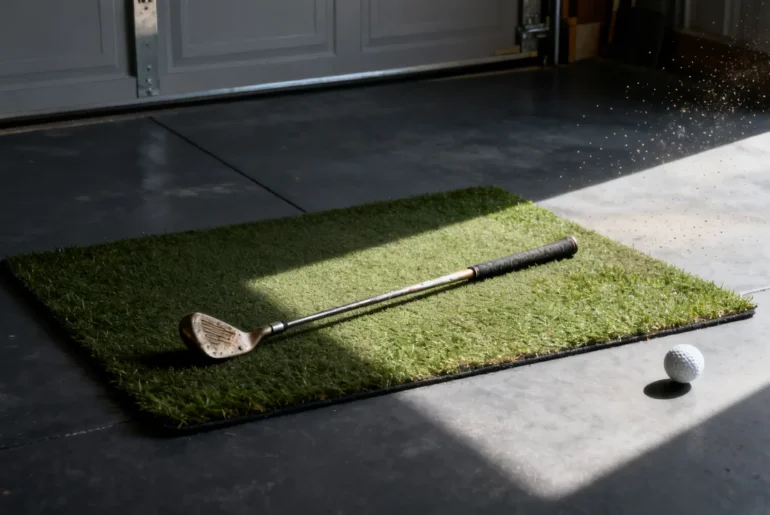
Use equipment-focused golf blog coverage to narrow a shortlist, not to diagnose your swing. If your practice area is indoors, our guide to golf hitting mats for a garage adds setup considerations. Equipment research is most useful when it supports a practice task you already understand.
6. GOLF: find instruction for a specific recurring problem
GOLF's instruction section provides access to advice from multiple teachers, with coverage spanning full swings, short-game technique and putting. That breadth is useful when you need a starting point for understanding a particular miss.
It also requires restraint. Two instructors may use different language or recommend different feels because they are addressing different players. Combining those ideas without understanding their purpose can make practice less focused.
Put it into practice: Select one article that matches your observed problem. Note the intended change, choose a manageable drill and use one cue during the session. Judge whether the miss becomes less frequent, not whether every shot suddenly looks perfect.
When using a broad golf blog or instruction publication, read for context. A tip aimed at golfers who leave the face open may be inappropriate for someone whose common miss goes left. Persistent problems are a good reason to book a lesson rather than continue stacking fixes.
7. Golf Monthly: build a repeatable short-game routine
Golf Monthly's tips section covers swing instruction, putting, chipping and other parts of the game. It is a useful resource for golfers whose practice is dominated by full swings even though their rounds reveal plenty of short-game mistakes.
Use its instruction to choose one task, then measure the result. Keep the lie, target and starting distance similar during the first test. Once you establish a baseline, introduce variation to make the task closer to what you face on the course.
Put it into practice: From one wedge distance, hit ten shots toward a defined landing area. Record how many finish within your chosen zone and whether misses tend to be short, long, left or right. Repeat from another distance in a later session.
A general golf blog becomes more useful when you convert its advice into your own record of outcomes. You do not need a complicated spreadsheet. A notebook showing the task, conditions and result is enough to guide the next session.
Turn one article into a 30-minute practice session
Reading becomes productive when it changes what you do. A simple 30-minute structure can keep you from spending an entire bucket experimenting with unrelated ideas.
First five minutes: establish a baseline
Warm up, then test the skill you want to improve. Use a small sample, such as ten putts from a fixed distance or ten iron shots with strike feedback. Record the outcome before introducing a new cue.
Do not choose a target so difficult that almost every attempt fails. You need a task that reveals differences between attempts and remains manageable enough to practice deliberately.
Next fifteen minutes: work on one task
Apply one drill from your chosen golf blog resource. Focus on the outcome the drill is designed to improve, and avoid adding a second article's swing thought halfway through.
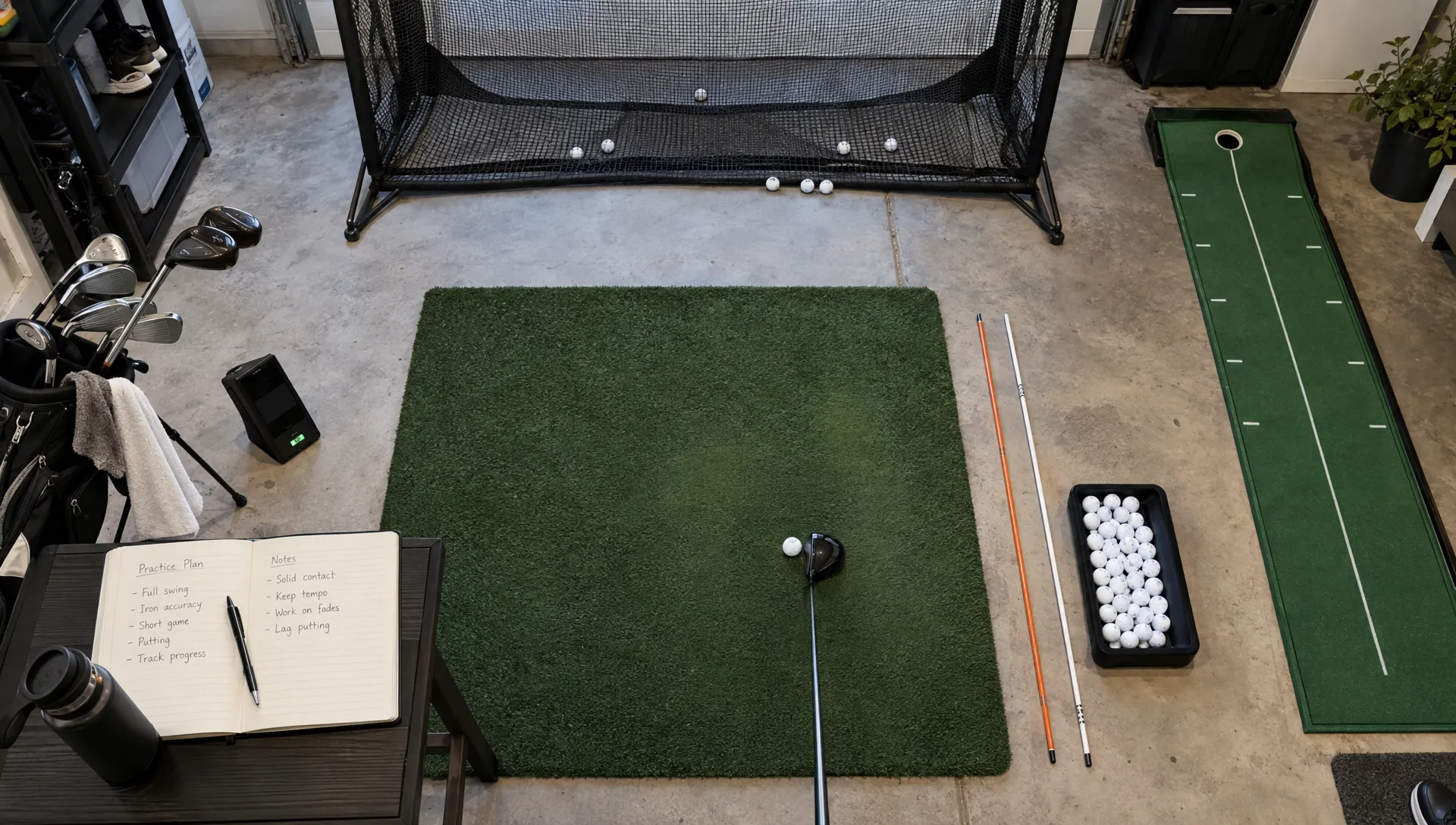
If you are hitting into a net, be clear about your feedback limits. Strike location can be observed with appropriate tools, but a net alone does not show full ball flight. Our guide to practice nets for a small yard can help you consider space and setup before building a home station.
Final ten minutes: retest and add variation
Repeat the original test under the same conditions. Then change targets, distances or clubs between shots to make the task less predictable.
Record what changed and what did not. Improvement within one session is encouraging, but the next session and your next few rounds provide a better check on whether the skill is becoming dependable.
Frequently asked questions
What makes a golf blog useful for practice? Useful content identifies a specific problem, explains who the advice suits and gives you a task you can measure. A clear drill with a repeatable score is generally more actionable than a collection of disconnected swing tips.
Should beginners read several instruction sites? Beginners can explore different resources, but should keep their active practice plan simple. One priority and one clear drill are easier to evaluate than several competing technique changes. A lesson can help establish that priority.
Can online instruction replace lessons? Online articles can explain concepts and suggest drills, but they cannot observe your individual movement or confirm a diagnosis. A qualified golf professional is particularly valuable for persistent contact problems, unclear swing changes or discomfort during practice.
How can I tell whether a drill is working? Repeat the same test across multiple sessions, then look for transfer to the course. Track outcomes such as strike consistency, distance-control errors or successful shots into a target area. Do not rely only on how a session felt.
Choose one resource and start measuring
Bookmark the resource that matches your biggest current problem, select one drill and record a baseline this week. Keep the task consistent long enough to evaluate it. For home-practice setup advice and equipment comparisons that support that plan, explore Thrill Golf.