
Sam Burns carries a mix of TaylorMade woods, Titleist irons and wedges, and a TaylorMade Spider putter that helped him win multiple PGA Tour events. His setup balances distance, consistency and control, built around Titleist T100 irons and TaylorMade Stealth 2 Plus woods that deliver the workability he needs to shape shots and attack flags.
This article breaks down every club in Sam Burns’ bag as of early 2026, including specs, shafts and the reasoning behind his choices.
Key Takeaways
- Burns plays a full TaylorMade woods setup (driver, 3-wood, 5-wood) paired with Titleist T100 forged irons for precision into greens
- His TaylorMade Spider Tour putter features a custom setup with extra weight and a longer 35-inch length for his upright stroke
- He uses three Titleist Vokey wedges (50°, 54°, 58°) to cover all short-game situations
- The bag features Project X shafts in the woods and True Temper Dynamic Gold in the irons for consistent ball flight
- Burns plays the Maxfli Tour X golf ball for its combination of distance and greenside spin
Sam Burns Driver
Sam Burns uses the TaylorMade Stealth 2 Plus driver set at 9° loft with a Project X HZRDUS Smoke Black 70 X shaft cut to 45.25 inches. The Stealth 2 Plus is TaylorMade’s low-spin, workability-focused model with a 60X Carbon Twist Face, smaller 450cc head and sliding weight track for fine-tuning ball flight.
Burns keeps the adjustable hosel in the neutral setting and positions the rear track weight in the fade-bias slot to control his natural draw. The setup produces a penetrating ball flight with around 2,400 rpm of spin, which helps him hold tight fairways and manage wind. [EDITOR: confirm exact loft setting and track weight position from recent tournament photos]
The Project X HZRDUS Smoke Black shaft is a low-launch, low-spin profile that complements his aggressive swing and helps him avoid the occasional left miss. At 70 grams, it provides stability without sacrificing speed. Burns generates approximately 118–120 mph of clubhead speed and carries the driver 300–310 yards in competition conditions.
Sam Burns Fairway Woods
Burns carries two TaylorMade fairway woods: a Stealth 2 Plus 3-wood (15°) and a Stealth 2 Plus 5-wood (19°). Both feature the same carbon face technology as his driver and use adjustable hosels set to neutral positions.
The 3-wood is shafted with a Project X HZRDUS Smoke Black 80 TX at standard length. Burns uses this club off the tee on tight driving holes and from the fairway when he needs 260–275 yards of carry. The lower spin profile helps him flight the ball down in windy conditions.
His 5-wood carries a slightly softer Project X HZRDUS Smoke Black 90 TX and serves as his go-to club from 235–250 yards. He relies on it from fairway bunkers and when he needs a higher launch than the 3-wood provides. The Stealth 2 Plus fairway woods use a V Steel sole design that improves turf interaction and provides consistent contact from a variety of lies.
Sam Burns Irons
Burns plays Titleist T100 irons from 4-iron through 9-iron. The T100 is a tour-level forged iron with a compact blade shape, thin topline and minimal offset. It features a co-forged construction with a 1025 carbon steel body and SUP-10 stainless steel face insert that increases ball speed on center and near-center strikes.
The set is built with True Temper Dynamic Gold Tour Issue X100 shafts at standard length and lie angles. Dynamic Gold X100 is one of the heaviest and stiffest shaft options on tour (130 grams in the 5-iron), which gives Burns the control and consistency he needs for precise approach play. The heavy weight also helps him maintain rhythm and produce a repeatable strike pattern.
[EDITOR: confirm exact iron model year and any custom specs like grind or loft adjustments from recent WITB photos]
Burns hits his irons with a slight draw and generates high spin rates that allow him to attack flags and stop the ball quickly. His 7-iron carries approximately 185 yards with around 7,000 rpm of spin, which is typical for a tour player with his swing speed and angle of attack.
Why Burns Chose T100 Irons Over Other Models
Burns transitioned to the T100 from an earlier Titleist model because it offers a better combination of workability and forgiveness than a pure blade. The slightly longer blade length and engineered tungsten weighting provide more stability on off-center hits without sacrificing the clean look and feedback he prefers at address.
Compared to the T100 S (stronger lofts, more distance-focused), the standard T100 gives him traditional lofts and trajectory control. The 7-iron in his set is 34°, which allows him to flight the ball on different windows depending on wind and pin position.
Sam Burns Wedges
Burns carries three Titleist Vokey Design SM9 wedges with the following lofts and grinds:
- 50° (F grind): Full-swing wedge for 125–135 yards, also used for lower bump-and-run shots around the green
- 54° (M grind): Versatile mid-loft wedge for full swings (100–115 yards) and greenside bunker play
- 58° (M grind): High-loft wedge for flop shots, tight lies and sand shots that require maximum spin and a steep landing angle
All three wedges are shafted with True Temper Dynamic Gold Tour Issue S400, which is one flex softer than his irons. The slightly lighter feel in the wedges helps Burns maintain tempo on partial swings and improve touch around the greens.
Burns uses SM9 wedges with a raw finish, which rusts over time and increases surface roughness for more consistent spin in wet conditions. He rotates his wedges every 6–8 weeks during the season to maintain sharp grooves. [EDITOR: confirm wedge rotation schedule and any custom stamping from equipment manager]
Sam Burns Putter
Sam Burns uses the TaylorMade Spider Tour mallet putter with a custom setup. The Spider Tour features a high-MOI stainless steel frame with tungsten weighting in the heel and toe, which increases forgiveness on off-center strikes and helps maintain roll speed across the face.
Burns’ putter is built to 35 inches in length, which is longer than standard (33–34 inches) to accommodate his upright posture and eye position over the ball. The putter head is weighted to approximately 370 grams (heavier than stock) to promote a smooth, pendulum stroke without excess hand action.
He uses a SuperStroke Traxion Pistol GT Tour grip, which is a medium-thickness pistol shape that allows him to feel the putter face while still reducing unwanted wrist rotation. The combination of added head weight and a slightly thicker grip helps him control pace on fast greens.
[EDITOR: confirm exact putter length, head weight and grip model from recent tournament setup or equipment photos]
The Spider Tour uses a Pure Roll insert with 45° grooves that encourage forward roll and reduce skid at impact. Burns typically sets up slightly open to his target line and uses a slight arc in his stroke, which suits the heel-toe weighted mallet design. For more on how different putter designs affect performance, see our complete guide to the TaylorMade Spider putter.
What Makes Burns’ Putter Setup Unique
Many tour players use shorter putters (33–34 inches) and lighter head weights (340–360 grams). Burns’ longer, heavier setup is tailored to his physical build and stroke mechanics. The added length allows him to stand taller and see the line more clearly, while the extra weight dampens any tendency to decelerate through impact.
This setup also helps him on slower or grainy greens where a heavier putter maintains momentum and produces a more consistent roll. The trade-off is that it can feel less nimble on fast, downhill putts, where lighter putters offer more touch.
Sam Burns Golf Ball
Burns plays the Maxfli Tour X golf ball, a four-piece urethane-covered ball designed for tour-level spin and distance. The Tour X features a large, high-speed core for low-spin driver performance and a soft urethane cover that generates high spin rates on iron and wedge shots.
The ball compresses around 90–95, which suits Burns’ swing speed and produces the optimal balance between distance and control. He typically sees driver spin rates in the 2,300–2,500 rpm range and wedge spin above 9,000 rpm, both of which are ideal for his shot shape and course conditions.
Burns switched to Maxfli after testing multiple tour-level balls and finding that the Tour X provided slightly more consistent spin on short irons and better performance in crosswinds. For a detailed comparison of how the Tour X stacks up against other premium balls, see our Maxfli golf balls review.
Sam Burns Club Specifications Summary Table
| Club | Model | Loft/Specs | Shaft |
|---|---|---|---|
| Driver | TaylorMade Stealth 2 Plus | 9°, 45.25″ | Project X HZRDUS Smoke Black 70 X |
| 3-Wood | TaylorMade Stealth 2 Plus | 15° | Project X HZRDUS Smoke Black 80 TX |
| 5-Wood | TaylorMade Stealth 2 Plus | 19° | Project X HZRDUS Smoke Black 90 TX |
| Irons (4–9) | Titleist T100 | Standard lofts | True Temper Dynamic Gold Tour Issue X100 |
| Wedges | Titleist Vokey SM9 | 50° (F), 54° (M), 58° (M) | True Temper Dynamic Gold Tour Issue S400 |
| Putter | TaylorMade Spider Tour | 35″, ~370g head weight | Stock |
| Ball | Maxfli Tour X | 4-piece urethane | — |
How Burns’ Setup Compares to Other PGA Tour Players
Burns’ equipment choices reflect several trends among top PGA Tour players: low-spin drivers paired with forged irons, heavy putter setups for stability and urethane-covered tour balls. However, his reliance on the TaylorMade Spider mallet is somewhat unusual among players who use bladed irons, as many prefer blade putters for a consistent feel across the bag.
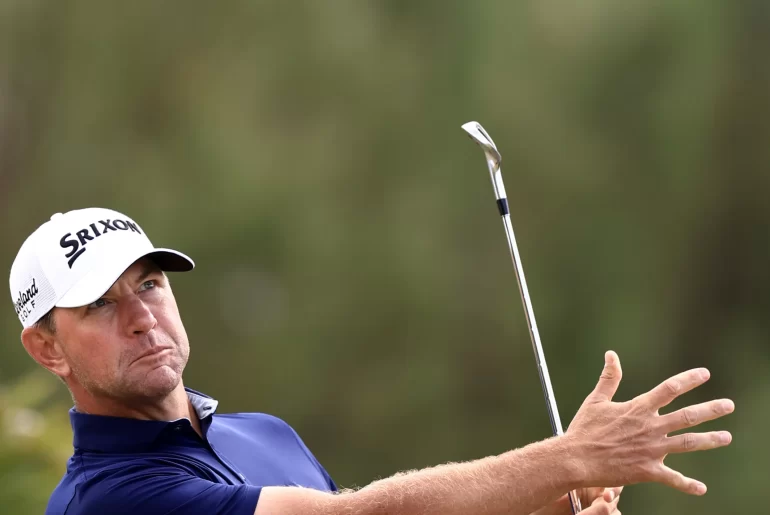
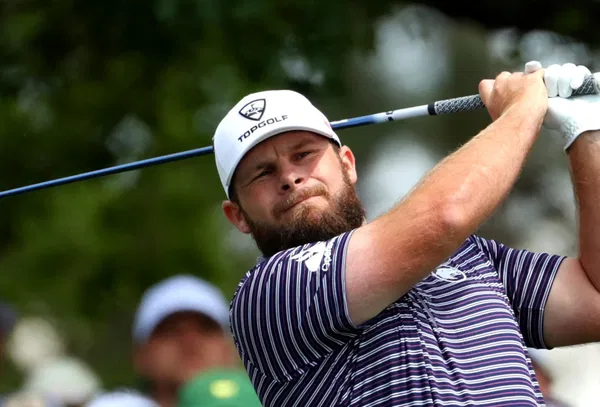
Compared to players like Lucas Glover (who uses a blade putter and slightly lighter iron shafts) or Tyrrell Hatton (who favors a more offset iron and shorter putter), Burns’ setup emphasizes stability and forgiveness in the putter and short game while maintaining precision in the long irons and approach clubs. His use of three fairway woods (no hybrid) also sets him apart from players who carry a driving iron or hybrid for versatility.
For a closer look at how other tour players build their bags, see our breakdowns of Lucas Glover’s WITB and Tyrrell Hatton’s WITB.
What Recreational Golfers Can Learn From Sam Burns’ Setup
Burns’ bag offers several lessons for golfers at any level. First, his iron and wedge shafts are matched for consistent feel and trajectory: the X100 in the irons and slightly softer S400 in the wedges create a seamless transition across the set. Recreational players often overlook shaft consistency, leading to gaps in distance and feel.
Second, Burns prioritizes forgiveness where it matters most. His Spider putter and T100 irons both offer more stability than pure blades, which helps him perform under pressure. Recreational golfers benefit even more from these designs, as off-center strikes are more common at slower swing speeds.
Third, Burns uses a ball that matches his swing speed and spin preferences. Golfers with swing speeds below 105 mph often gain more from a softer compression ball (70–85) than from a tour-level ball like the Tour X. Testing multiple balls and measuring spin rates with a launch monitor can reveal which model best suits your game.
Finally, Burns customizes his equipment to fit his swing and body type. His longer putter, heavier head weight and specific shaft profiles are tailored to his mechanics. Recreational golfers should seek a professional fitting to identify the specs that improve consistency and confidence, rather than copying a tour player’s setup directly.
Common Questions About Sam Burns’ Equipment Choices
Why Does Burns Use a Mallet Putter Instead of a Blade?
Burns switched to the Spider Tour for its high MOI and improved performance on off-center strikes. Mallet putters distribute weight to the perimeter, which increases stability and helps maintain roll speed across the face. While blade putters offer a cleaner look and more feedback, Burns prioritized consistency over aesthetics.
The Spider’s alignment aids also help him set up square to his target line, which is critical on fast tournament greens where even a small misalignment can cause a miss. For more on the differences between mallet and blade designs, see our mallet vs blade putter guide.
How Often Does Burns Change His Equipment?
Burns typically changes his driver and woods once per season when manufacturers release updated models. He tests new prototypes during the off-season and makes the switch if he sees measurable improvements in distance, spin or consistency. His irons, however, remain in play for multiple years as long as the grooves and lie angles stay within spec.
Wedges are rotated every 6–8 weeks to maintain sharp grooves and consistent spin. This is standard practice among tour players, as wedge grooves wear down quickly from practice and play on abrasive surfaces. [EDITOR: confirm exact replacement schedule from Burns’ equipment manager]
Can Recreational Golfers Use the Same Clubs as Sam Burns?
Recreational golfers can buy the same club models Burns uses, but they should not expect the same results without a professional fitting. Burns’ clubs are built with tour-level shafts (X100, TX flex) that require swing speeds above 110 mph to perform optimally. Most recreational golfers swing 85–100 mph and benefit from regular or stiff shafts with higher launch profiles.
The T100 irons and Vokey wedges are also designed for skilled ball-strikers who can control trajectory and spin. Golfers with inconsistent contact should consider more forgiving models like the Titleist T200 or T300, which offer larger sweet spots and higher launch angles. For guidance on testing clubs before buying, see our article on what to test at a golf equipment store.
Final Thoughts on Sam Burns’ WITB
Sam Burns’ bag reflects a modern tour setup built around distance, workability and consistency. His TaylorMade woods deliver low-spin performance off the tee, while his Titleist T100 irons and Vokey wedges provide the precision and spin control needed to attack flags and score under pressure. The Spider Tour putter, with its custom length and weight, anchors his short game and helps him convert makeable putts on fast greens.
Recreational golfers can learn from Burns’ approach: prioritize equipment that matches your swing speed and ball flight, test multiple options before committing and invest in a professional fitting to dial in specs like shaft flex, length and lie angle. The right setup improves not only performance but also confidence, which is often the difference between a good round and a great one.
[EDITOR: add recent tournament photo of Burns at address with full bag visible; confirm all specs match current season setup]
Frequently asked questions
What putter does Sam Burns use?
Sam Burns uses a TaylorMade Spider Tour mallet putter built to 35 inches with a heavier head weight (approximately 370 grams) and a SuperStroke Traxion Pistol GT Tour grip. The custom setup provides stability and consistency on fast greens.
What irons does Sam Burns play?
Sam Burns plays Titleist T100 forged irons (4–9) with True Temper Dynamic Gold Tour Issue X100 shafts. The T100 is a tour-level blade-style iron that offers workability, consistent ball flight and high spin rates for precise approach play.
What driver is in Sam Burns' bag?
Sam Burns uses the TaylorMade Stealth 2 Plus driver set at 9° loft with a Project X HZRDUS Smoke Black 70 X shaft. The driver features a 450cc head, adjustable hosel and sliding weight track for fine-tuning ball flight and spin.
What golf ball does Sam Burns use?
Sam Burns plays the Maxfli Tour X golf ball, a four-piece urethane-covered ball designed for tour-level distance and spin. The Tour X provides low spin off the driver and high spin on wedge shots, making it ideal for Burns’ swing speed and shot shape.
How often does Sam Burns change his wedges?
Sam Burns rotates his Titleist Vokey SM9 wedges every 6–8 weeks during the PGA Tour season to maintain sharp grooves and consistent spin. This is standard practice among tour players to ensure optimal performance on approach and greenside shots.
What shafts does Sam Burns use in his woods?
Sam Burns uses Project X HZRDUS Smoke Black shafts in his TaylorMade woods: 70 X in the driver, 80 TX in the 3-wood and 90 TX in the 5-wood. These low-launch, low-spin shafts help him control ball flight and manage wind.