The TaylorMade Spider putter uses a high-moment-of-inertia (MOI) mallet design with weight positioned far from the face to resist twisting on off-center hits. Since its 2008 introduction, the Spider family has won more than 100 professional tour events and become one of the most recognizable putters on every major tour. The design delivers more consistent roll speed and direction across the entire face compared to traditional blade putters, helping golfers of all skill levels reduce three-putts.
This guide explains how the Spider putter works, breaks down the current and recent models, compares key design features, and provides decision criteria to help you choose the right Spider for your stroke.
Why the Spider Design Works: High MOI and Stability
MOI measures a putter head’s resistance to twisting when the ball strikes away from the center. The Spider’s wide, low profile places most of its weight in the perimeter and heel-toe extremes, creating MOI values typically between 4,500 and 6,000 g·cm², significantly higher than blade putters (2,500–3,500 g·cm²).
Higher MOI means less energy lost and less directional deflection on mishits. A strike one inch toward the toe on a Spider will lose roughly 5–7% of ball speed instead of 10–12% on a blade. That difference translates to tighter dispersion on short and mid-range putts where most amateur golfers leave strokes on the course.
The Spider’s raised alignment features and visual cues—center sightlines, contrasting colors, and frame outlines—help golfers aim more accurately and consistently repeat their setup position.
Spider Model Lineup: Current and Recent Options
Spider GT (2022–Present)
The Spider GT uses a rolled top line and Pure Roll² insert to reduce skid at impact. Available in three shapes—GT Max (heel-toe weighted), GT Rollback (weight pushed back), and GT Notchback (blend of both)—each offering slightly different stability and alignment profiles. Standard lengths are 33–35 inches, with a 3-degree loft.
The Pure Roll² insert features raised grooves spaced to lift the ball into forward roll faster. TaylorMade claims a 15% improvement in topspin generation within the first foot compared to a milled face. The GT models include adjustable sole weights (5 g, 10 g, 15 g) to dial in head weight from 340 g to 365 g.
Spider Tour (2018–Present)
The Spider Tour is the model most often seen on professional tours. It features a shorter, narrower mallet head than recreational Spider models, with a full aluminum body and True Path alignment system: two parallel white lines and a center sightline perpendicular to the face.
The Spider Tour uses a steel frame and aluminum body construction, placing 70% of the head’s mass in the perimeter. Available in multiple hosel configurations including single bend, double bend, and short slant neck, allowing fitters to match arc and face balance to a golfer’s stroke.
[EDITOR: add professional wins data and actual player usage stats from 2024–2026 seasons]
Spider X (2019–2023)
The Spider X introduced the True Path alignment and white-with-silver colorway that became TaylorMade’s signature look. It uses a heavier 370 g head and a single-bend hosel as standard, suiting moderate arc strokes. The steel frame and aluminum insert provide firm feedback at impact.
Spider EX (2021–2023)
The Spider EX sits between the Tour and X models in size, with a slightly smaller footprint than the X but more perimeter weighting than the Tour. It also uses the Pure Roll insert from earlier Spider generations and includes three hosel options: single bend, double bend, and short slant.
Legacy Models (2008–2018)
Earlier Spider iterations—Spider, Spider S, Spider Tour Black, Spider Mini—established the design language but used older insert technology and less refined weighting systems. These remain available on the used market at 30–50% below current retail but lack the adjustability and topspin optimization of GT and Tour models.
Design Features That Affect Performance
Insert Technology
Pure Roll² (GT models) uses 45-degree ascending grooves that cover the full face width. The grooves engage the ball’s surface to create topspin immediately, reducing bouncing and skidding on uneven greens.
Pure Roll (X, EX, earlier models) features 12 raised aluminum beams angled upward to promote forward roll. While effective, testing shows Pure Roll² launches the ball into true roll about 6 inches sooner on average.
Steel or aluminum inserts without grooves (some Tour models) provide firmer feedback and more direct feel but rely entirely on loft and speed control to generate roll.
Hosel Configuration and Face Balance
Single-bend hosel (slight toe hang, 15–20 degrees): suits golfers with a small arc in their stroke, typically 5–10 degrees of rotation through impact.
Double-bend or plumber’s neck hosel (moderate toe hang, 10–15 degrees): fits golfers with a moderate arc, common among players with 8–12 degrees of rotation.
Short slant neck (near face-balanced, 5 degrees or less toe hang): designed for straight-back-straight-through strokes with minimal rotation.
Matching the hosel to your stroke arc helps the putter return square at impact without conscious manipulation. A mismatch of more than 10 degrees increases the likelihood of pushed or pulled putts under pressure.
For guidance on reading greens and improving your stroke mechanics, see How to Read Golf Greens Before You Line Up a Putt.
Head Weight and Length
Most Spider models range from 340 g to 375 g, heavier than traditional blades (320–340 g). The added mass smooths tempo and reduces wrist break during the stroke.
Standard lengths are 33, 34, and 35 inches. Longer putters (34–35 inches) encourage a more shoulder-driven stroke; shorter putters (32–33 inches) work better for golfers with a bent-over posture or strong wrist action.
GT models include adjustable weights to fine-tune head weight without changing length or grip.
Comparison Table: Key Spider Models
| Model | Insert | MOI (g·cm²) | Head Weight | Hosel Options | Best For |
|---|---|---|---|---|---|
| Spider GT Max | Pure Roll² | ~5,700 | 340–365 g (adj.) | Single, double, slant | Maximum forgiveness, recreational players |
| Spider Tour | Steel/aluminum | ~4,900 | 360 g | Single, double, slant | Precise alignment, tour-level feel, competitive players |
| Spider X | Pure Roll | ~5,200 | 370 g | Single bend | Moderate arc strokes, golfers wanting visual confidence |
| Spider EX | Pure Roll | ~5,000 | 355 g | Single, double, slant | Mid-size head, versatile stroke types |
How to Choose the Right Spider Model
Step 1: Determine your stroke type. Use a mirror or smartphone to record your putting stroke and note how much the putter face rotates from backstroke to follow-through. Less than 5 degrees is straight-back-straight-through; 5–15 degrees is moderate arc; more than 15 degrees is strong arc. Match that to the hosel options listed above.
Step 2: Consider your alignment preference. If you struggle with aim, the True Path system on the Tour, X, and EX models provides clearer feedback than single-line putters. GT models use a simplified sightline that some golfers find less cluttered.
Step 3: Test for feel and feedback. Pure Roll² inserts produce a softer sound and feel; steel or aluminum inserts give firmer feedback. Neither is objectively better, but consistent feedback helps you gauge speed control. [EDITOR: recommend testing at a local fitting center or demo day and add link to nearest TaylorMade fitting location]
Step 4: Check head weight and length. If you three-putt often on long lag putts, a heavier head (365–375 g) and longer length (34–35 inches) encourage smoother tempo. If you struggle with short putts, lighter weight and shorter length improve touch and control.
Before committing to a purchase, test different models in realistic conditions. Read What to Test Before Buying at a Golf Equipment Store for a full checklist.
Common Mistakes to Avoid
Choosing based on looks alone. The Spider’s distinctive shape appeals visually, but performance depends on matching hosel and weight to your stroke mechanics. Testing on a green or mat with real balls is the only reliable way to evaluate fit.
Ignoring grip size and type. Factory grips are often too thin for golfers with larger hands or those prone to wrist break. A thicker grip (mid-size or jumbo) reduces hand rotation and complements the Spider’s high-MOI design.
Overlooking length and lie angle. An incorrect length forces poor posture; incorrect lie angle tilts the putter and affects aim. Both are adjustable during fitting and critical to consistent contact.
Spider Putter vs Other Mallet Designs
The Spider competes with other high-MOI mallets including Odyssey’s Tri-Hot series, Ping’s Fetch and Kushin models, and Scotty Cameron’s Phantom X line. The Spider’s advantages are adjustable weighting (GT models), tour-proven track record, and a wider range of hosel options within a single product family.
Compared to insert putters like Odyssey’s White Hot or Evnroll’s groove technology, the Spider’s Pure Roll² produces similar topspin results but in a heavier, more stable head. Golfers who prefer blade putters or compact mallets may find the Spider too large at address.
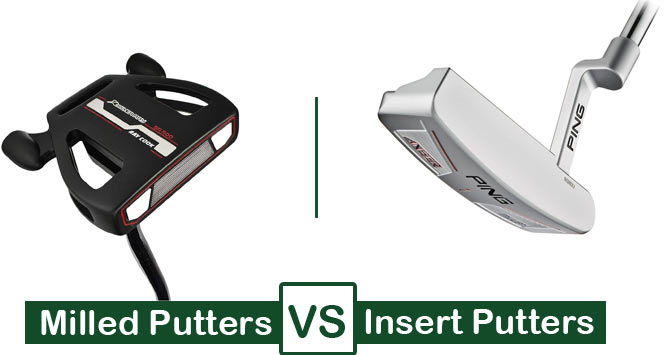
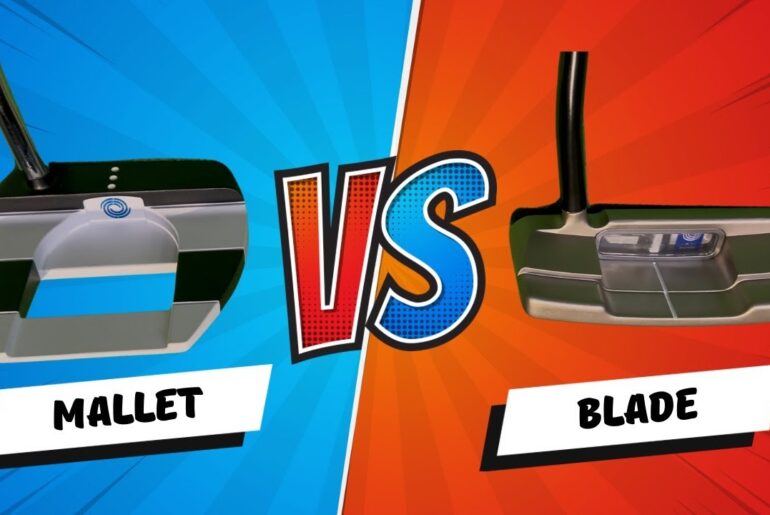
For a detailed comparison of mallet and blade designs, see Mallet vs Blade Putter: Which One Fits Your Golf Game?. For insert vs milled options, read Milled vs Insert Putters: Key Differences in Feel, Forgiveness & Performance.
Practice and Skill Development
A forgiving putter reduces the penalty for mishits but does not replace green-reading skill or consistent stroke mechanics. To maximize the Spider’s design advantages, practice distance control drills: putt to a target 10, 20, and 30 feet away, focusing on leaving the ball within a three-foot circle rather than holing every putt.
Use alignment aids—tees, string lines, or laser pointers—to confirm your setup matches the True Path sightlines. Misalignment of even two degrees at address negates the benefit of a stable, high-MOI head.
For home practice, consider setting up a dedicated putting area. See The Best Indoor Putting Green for Home: A Complete Guide for 2026 and Build a Home Practice Setup With Thrill Golf.
Pricing and Availability
New Spider GT models retail between $350 and $450 depending on configuration and customization. Spider Tour models are $400–$500. Used or previous-generation Spider X and EX models sell for $150–$250 in good condition.
Custom options—length, loft, lie angle, grip, shaft—add $50–$100. TaylorMade offers direct online ordering with custom specs, typically delivered within 10–14 days. Authorized retailers and fitting centers stock standard configurations for immediate purchase.
[EDITOR: confirm current pricing and custom lead times for 2026]
Maintenance and Longevity
Clean the putter face after each round with a damp cloth to remove dirt and grass residue that can affect roll consistency. Avoid abrasive cleaners on the Pure Roll² insert, which can wear down the raised grooves.
Check the hosel connection and adjustable weights (GT models) every few months to ensure screws remain tight. Loose weights shift the center of gravity and alter feel.
The aluminum body resists corrosion but can dent or scratch with rough handling. A headcover prevents cosmetic damage during transport.
Final Verdict and Next Steps
The TaylorMade Spider putter delivers measurable forgiveness and roll consistency through high-MOI design and groove technology. The Spider Tour suits competitive golfers who prioritize precise alignment and tour-level feedback. The Spider GT family offers more adjustability and a softer feel, making it the better choice for recreational players or those transitioning from a blade putter.
Your next step: visit a fitting center to test Spider models with your own stroke on real greens, comparing at least two hosel configurations and head weights. Record your results—strokes gained, dispersion at 10 and 20 feet—to make an objective decision. If fitting is not immediately available, demo a Spider for a few rounds through a trial program or rent-before-you-buy service.
Putting accounts for 40% of strokes in a typical round. Choosing equipment that matches your mechanics and builds confidence at address pays dividends on every green.
Frequently asked questions
What is the difference between the Spider Tour and Spider GT?
The Spider Tour uses a smaller, tour-preferred head with steel/aluminum construction and firmer feedback, while the Spider GT features a larger head with Pure Roll² grooved insert for softer feel and faster topspin. The GT also includes adjustable sole weights; the Tour does not. Tour models suit competitive players prioritizing alignment precision; GT models offer more forgiveness for recreational golfers.
Which Spider putter is best for a straight-back-straight-through stroke?
Choose a Spider model with a short slant neck or face-balanced hosel configuration, such as the Spider GT with slant neck or Spider Tour short slant. These hosels have less than 5 degrees of toe hang, matching the minimal face rotation in a straight-back-straight-through stroke and helping the putter return square at impact.
How does the Pure Roll² insert improve putting performance?
Pure Roll² uses 45-degree ascending grooves across the entire face to lift the ball into forward roll within the first few inches of contact, reducing skid and bounce on uneven greens. Testing shows it generates topspin about 15% faster than a milled face, leading to more consistent speed control and fewer short putts that wobble off line.
Can I adjust the weight on a Spider putter?
Spider GT models include adjustable sole weights (5 g, 10 g, 15 g) that let you change total head weight from 340 g to 365 g without altering length or balance. Other Spider models—Tour, X, EX—do not have adjustable weights and require a club builder to add or remove weight permanently if customization is needed.
Is the TaylorMade Spider putter good for high handicappers?
Yes. The Spider’s high MOI (4,900–5,700 g·cm²) provides more forgiveness on off-center hits than blade putters, helping high handicappers maintain better speed and direction consistency. The GT models’ larger alignment features and softer insert also build confidence at address, which reduces setup variability and three-putts.
How do I know which Spider hosel fits my stroke?
Record your putting stroke to measure face rotation from backstroke to follow-through. Less than 5 degrees rotation suits a short slant neck (face-balanced). Moderate arc with 5–15 degrees rotation matches a single-bend or double-bend hosel. Strong arc with more than 15 degrees rotation needs a single-bend with more toe hang. A professional fitting confirms the best match.