
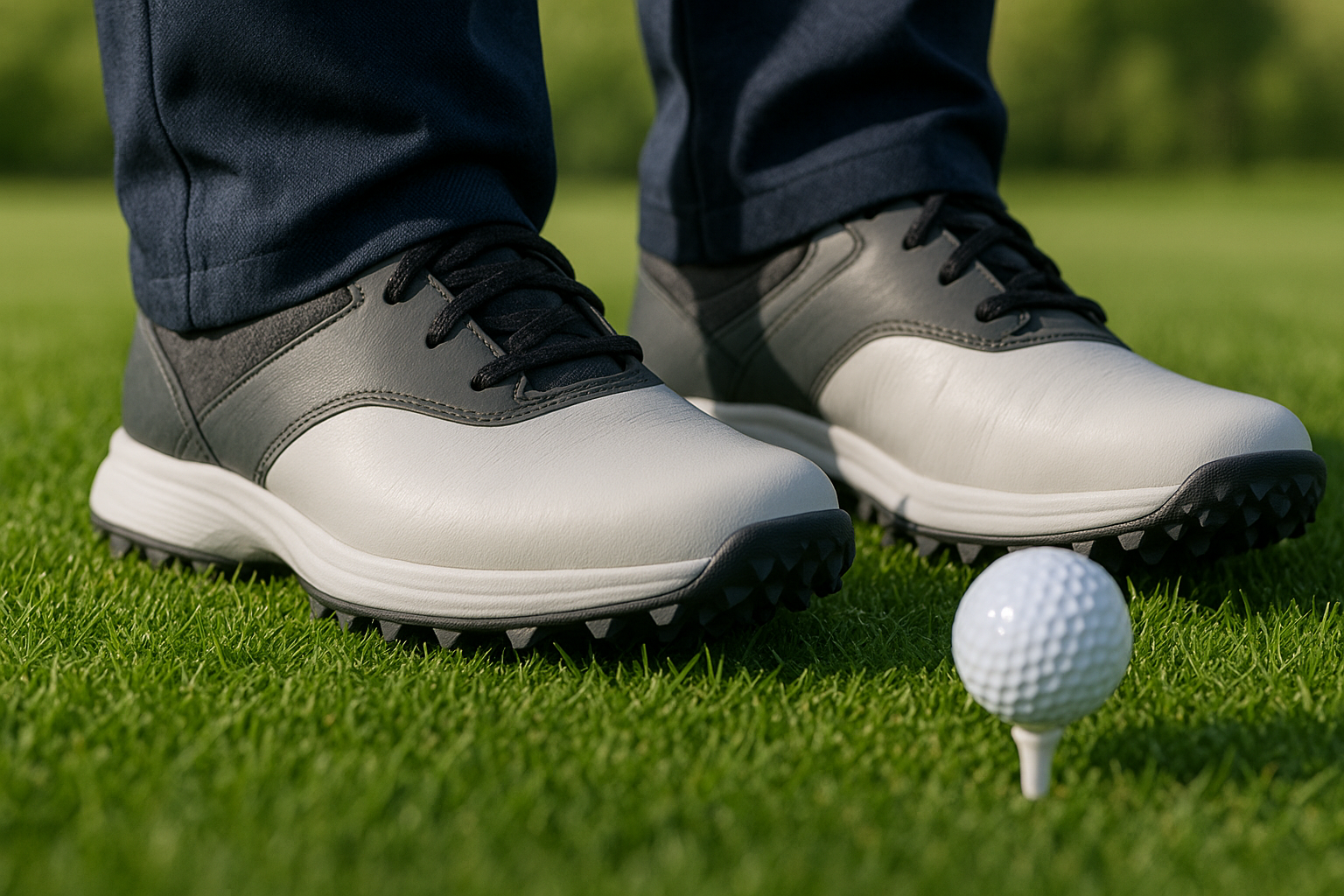
The right golf shoes improve your stability, comfort, and confidence through 18 holes, regardless of weather or terrain.
The best golf shoes balance traction, waterproofing, breathability, and fit, while matching your swing style and the conditions you play most often.
Whether you need spikeless versatility, winter waterproofing, or summer breathability, this guide compares options across each category to help you choose.
Key Takeaways
- Spiked shoes offer maximum traction on wet grass and hills; spikeless models provide everyday versatility and comfort on and off the course.
- Summer shoes prioritize breathability and drainage; winter models add insulation, waterproofing, and grip for cold, wet conditions.
- Comfort depends on fit, cushioning, and support: try shoes on with your golf socks and test lateral stability, not just forward walking comfort.
- Most golfers benefit from one primary pair matched to local climate plus a second pair for extreme conditions or travel.
- Premium materials (leather, Gore-Tex, Boost foam) increase upfront cost but typically last 2–3 seasons longer than budget synthetics.
What Makes a Golf Shoe Great
A great golf shoe must perform across four non-negotiable areas: traction during the swing, waterproof protection in wet conditions, all-day comfort through a five-hour round, and durability over hundreds of rounds.
Traction comes from either replaceable spikes or molded nubs that grip turf without tearing it. Waterproofing depends on membrane technology (Gore-Tex, proprietary barriers) and sealed seams.
Comfort requires cushioned midsoles, arch support, and a fit that locks your heel without pinching your forefoot.
Durability shows in upper materials, sole construction, and how well the shoe resists cracking or separating after repeated wet-dry cycles.
The trade-offs matter as much as the strengths. Spiked shoes grip better but feel less natural when walking on cart paths.
Leather uppers break in beautifully but take longer to dry. Lightweight trainers feel nimble but may lack lateral support for players with fast hip rotation.
Before choosing, define your priorities: do you walk or ride, play in morning dew or afternoon heat, prioritize feel or forgiveness?
Best Spiked Golf Shoes
Spiked golf shoes deliver unmatched traction on wet grass, steep slopes, and during aggressive weight shifts.
Modern designs use six to eight replaceable cleats (typically Softspikes or proprietary systems) positioned under the forefoot and heel.
The best spiked models balance aggressive grip with comfort, using cushioned midsoles and flexible uppers that do not feel like work boots.
Best for: Players who walk hilly courses, play in wet conditions frequently, or generate high swing speeds with pronounced lateral movement. Also ideal for tournament days when maximum stability matters more than casual comfort.
What to look for: Check that spikes are replaceable (not permanent nubs), confirm the upper is waterproof (not just water-resistant), and test lateral stability by standing on one foot and twisting. The shoe should resist rotation without your foot sliding inside. Expect to replace spikes every 15–20 rounds depending on cart path wear.
We went through 2026 test results from leading golf equipment reviewers and picked three spiked shoes that stand out for fit, traction, and value.
Quick Picks
| Shoe | Best For | Fit | Approx. Price |
|---|---|---|---|
| adidas Adipower 26 | Maximum traction | Snug, slightly tight toe | $140 |
| Under Armour Drive Pro Clone | Wide feet and walkers | Roomy, wide toe box | $180 |
| FootJoy Premiere Series (2026) | Classic style, premium feel | Padded, secure | $250 |
1. adidas Adipower 26: Best for Traction
The Adipower 26 is the pick for golfers who care most about grip. It earned the top traction score in MyGolfSpy’s 2026 spiked shoe test.
Fit: It has a snug, performance-focused fit. Some testers found the toe box a little tight. If you have a wider forefoot, try them on before buying or consider going up half a size.
Comfort and break-in: The cushioning is firmer than older adidas models. That gives a stable, connected feel from the first round, but it’s not the softest shoe to walk in.
Who it’s for: Better players and fast swingers who want their feet locked to the ground, especially on damp mornings.
2. Under Armour Drive Pro Clone: Best for Wide Feet
Wide feet are hard to fit in many spiked shoes. The Drive Pro Clone is one of the easiest fixes.
Fit: It’s noticeably roomier, especially in the toe. That suits wide feet well, but golfers with narrow feet may feel less secure through the swing.
Traction: It combines spikes with secondary lugs, and reviewers say it held up well in all conditions.
Comfort and break-in: It’s comfortable out of the box. The dual-foam midsole makes it a strong option if you walk 18 holes regularly.
Who it’s for: Golfers with wide feet and walkers who want comfort without giving up grip.
3. FootJoy Premiere Series (2026): Best Premium Classic
FootJoy’s Premiere line is the go-to for golfers who want a traditional look with modern performance. The 2026 update fixed the line’s biggest complaint.
Fit: Extra padding around the collar and tongue makes them a little harder to slip on at first, but they’re very comfortable once laced. The Packard version uses V-lacing if you prefer a different feel through the midfoot. FootJoy has traditionally offered wide widths, so check what’s available in your size.
Comfort and break-in: Older Premieres took weeks to soften. Reviewers describe the 2026 version as having “virtually no break-in period.”
Traction: The outsole was redesigned with about half as many traction elements as before. They’re now pyramid-shaped, so they bite into the ground better.
Who it’s for: Golfers who want classic style, premium leather and all-day comfort, and don’t mind the higher price.
Spiked Shoes on Bermuda vs. Bentgrass
The grass you usually play on should affect which shoe you choose.
- Bermuda grass is coarse and wiry and gets slippery under morning dew or after rain. Look for deeper spikes and strong lugs on the outside edge of the shoe so your trail foot doesn’t slide. Traction-first shoes like the Adipower 26 suit these courses.
- Bentgrass is finer and softer, so most modern soft-spike patterns grip it easily. The bigger issues are mud packing into the outsole and the marks spikes leave on greens. A cleaner, less aggressive pattern like the 2026 Premiere works well here.
Spiked Shoe Comparison
| Feature | Typical Benefit | Trade-Off |
|---|---|---|
| Replaceable spikes | Maximum wet-grass traction, customizable grip | Require maintenance, feel awkward on pavement |
| Leather upper | Breaks in to your foot, premium feel | Longer dry time, higher cost |
| Synthetic upper | Quick-dry, lightweight, lower price | Less breathable, may not mold to foot shape |
| BOA closure | Micro-adjustable fit, easy on/off | Adds 20–40 grams, cable can break (rare) |
Most Comfortable Golf Shoes
Comfort in golf shoes comes from three elements: a midsole that absorbs impact without feeling mushy, an upper that flexes with your foot without hot spots, and a fit that locks your heel while giving your toes room to splay.
The most comfortable models typically use EVA foam, polyurethane, or proprietary cushioning (Boost, React, FuelFoam) in the midsole, combined with padded collars and breathable liners.
Spikeless designs dominate the comfort category because they walk more naturally and transition easily from the course to the clubhouse or car.
The best spikeless soles use dense rubber with multidirectional lugs or nubs that grip turf surprisingly well while feeling stable on concrete.
For players who walk 18 holes regularly, cushioning and weight matter more than they do for riders.
Best for: Walkers who play 2–3 times per week, older players prioritizing joint comfort, or anyone who values a sneaker-like feel over maximum performance.
What to look for: Try on shoes in the afternoon when your feet are slightly swollen. Wear the socks you will play in. Walk, squat, and twist on one foot to test lateral support. The heel should not slip when you walk, and your toes should not touch the front when standing on a slope. Check if the insole is removable for custom orthotics.
We looked at 2026 test results from leading golf equipment reviewers and picked three shoes that stand out for comfort, especially for golfers who walk.
Quick Comparison
| Shoe | Midsole | Listed Weight | Fit | Width Options | Approx. Price |
|---|---|---|---|---|---|
| TravisMathew The NuAge Mega | NuAge Foam | ~410 g per shoe | True to size, roomy toe box | Standard (wider-feeling toe) | $199.95 |
| Skechers Blade Tour (Slip-Ins) | Foam midsole + Arch Fit insole | ~820 g per pair | Wider forefoot than expected | Medium and Wide | $165 |
| Under Armour Drive Pro Clone | Dual-density foam | Not published | True to size, wide toe | Check by region | $190 (spiked) / $170 (spikeless) |
1. TravisMathew The NuAge Mega: Most Comfortable Overall
The NuAge Mega was named the most comfortable shoe in MyGolfSpy’s 2026 spiked testing. One tester compared it to a Hoka running shoe.
- Midsole: TravisMathew’s NuAge Foam, built for plush cushioning and energy return over long rounds.
- Weight: About 410 g per shoe. That’s reasonable for a spiked shoe with this much cushioning.
- Fit: Runs true to size, and a heel-lock insert keeps your heel from slipping. The toe box is generous even though the shoe is listed as standard width. Sizes run US 8–13.
- On-course feedback: MyGolfSpy’s testers felt they could comfortably walk 36 holes in it. A National Club Golfer reviewer played five days in a row with no discomfort or rubbing.
- Best for: Golfers who walk often and want maximum cushioning in a spiked shoe.
2. Skechers Blade Tour (Slip-Ins): Best for Wide Feet and Easy Wear
Skechers brought its comfort reputation to golf, and the Blade Tour earned a perfect comfort score in MyGolfSpy’s 2026 testing.
- Midsole: A foam midsole paired with Skechers’ Arch Fit insole, which moulds to the shape of your foot.
- Weight: About 820 g per pair (about 410 g per shoe).
- Fit: Comfortable straight out of the box with no break-in. The forefoot is wider than most golf shoes, and the Slip-Ins heel lets you put them on hands-free.
- Width options: Medium and Wide, which makes it one of the easiest choices if you have wide feet.
- Extras: Replaceable softspikes and a 1-year waterproof warranty.
- Best for: Golfers with wide feet and anyone who wants comfort from the very first round.
3. Under Armour Drive Pro Clone: Best Balance of Comfort and Stability
Very soft shoes can feel unstable during the swing. The Drive Pro Clone avoids that by using two foams in one midsole.
- Midsole: Dual-density cushioning, with softer foam on the inside for comfort and firmer foam on the outside for stability as you shift your weight.
- Weight: Under Armour hasn’t published an official weight.
- Fit: True to size, with a roomier toe box. Golfers with narrow feet may feel less locked in. Sizes run US 7–15.
- On-course feedback: Reviewers gave it a 10/10 for out-of-the-box comfort with no break-in needed, and said it performed especially well during longer rounds. The spikeless version (Drive Pro Clone SL) was rated as having the most comfortable upper in MyGolfSpy’s 2026 spikeless test, and it’s recommended for golfers who walk a lot.
- Best for: Walkers who want soft cushioning without losing stability.
Best Winter Golf Shoes
Winter golf shoes must keep your feet warm, dry, and stable on cold, wet turf or even light snow.
The best winter models add insulation (Thinsulate, fleece liners, or thermal booties), fully waterproof membranes (not just coated uppers), and aggressive tread or spikes that cut through soft mud without clogging.
Some designs include higher ankle collars to block drafts and keep snow out.
Waterproofing in winter shoes must work in near-freezing temps when moisture can seep through seams that stay sealed in summer.
Look for Gore-Tex or equivalent membranes with taped seams. Insulation should keep feet warm in 30–45°F conditions without overheating on warmer fall days.
Fleece-lined models add 5–10°F of effective warmth.
Best for: Players in northern climates who play through fall and early spring, or anyone who refuses to let cold weather end their season.
What to look for: Confirm the waterproof rating (Gore-Tex or equivalent, not “water-resistant”). Check if the insulation is removable for shoulder-season rounds. Winter shoes often fit snugger due to liners; order a half-size up if between sizes. Test the sole flexibility in cold temps: some rubber compounds stiffen in freezing weather and lose grip.
We looked at 2026 reviews and manufacturer specs and picked three winter options that stand out for waterproofing, warmth, and breathability.
Quick Comparison
| Shoe | Waterproofing | Warmth | Waterproof Warranty | Fit | Approx. Price |
|---|---|---|---|---|---|
| ECCO Biom C4 Gore-Tex | Gore-Tex Surround (all around the foot) | Moderate | 2 years | Check ECCO sizing | £124.50 |
| adidas Tour360 Gore-Tex | Gore-Tex laminated membrane | Moderate (no thermal lining) | 1 year | True to size | £179 |
| FootJoy Stormwalker Boot | Waterproof full-grain leather, ankle cuff | High (thermal lining) | 1 year | Full forefoot, slightly narrow heel | £109 |
1. ECCO Biom C4 Gore-Tex: Best Overall Winter Shoe
The Biom C4 is the safest all-round winter pick, mainly because of how the waterproofing is built.
- Waterproofing: ECCO uses Gore-Tex Surround. Standard membranes only line the upper, but this one wraps the whole foot, including underneath, so the shoe stays waterproof while moisture can still escape through the bottom.
- Breathability: This is its biggest strength. Breathing all around the foot reduces the clammy, damp-sock feeling many waterproof shoes cause on longer rounds.
- Warranty: 2 years waterproof, the longest of any shoe here.
- Best for: Golfers who play all winter in mixed conditions and want waterproofing they can rely on season after season.
2. adidas Tour360 Gore-Tex: Best for Performance in the Wet
If you want a tour-style spiked shoe that also handles winter, the Gore-Tex version of the Tour360 is the one to get.
- Waterproofing: A Gore-Tex membrane laminated into the shoe, not a surface coating. Coatings wear off over time, while a laminated membrane is built into the upper.
- Breathability: Reviewers say it breathes well enough that your feet don’t get sweaty by the back nine, even fully sealed.
- Warmth: There’s no thermal lining. On frosty mornings, wear thicker winter socks.
- Fit: True to size, with a regular fit. If you’re between sizes and plan to wear thick socks, go for the larger size. Golfers with wide feet should try them on first.
- Warranty: 1-year waterproof.
- Best for: Better players who want a stable, grippy spiked shoe for wet winter rounds.
3. FootJoy Stormwalker Boot: Warmest Option for Freezing Conditions
For truly cold, wet courses, a golf boot does what a shoe can’t.
- Waterproofing: A full-grain leather upper with an ankle-height cuff, which keeps out water, mud, and wet grass that would get in over the top of a normal shoe.
- Warmth: It has a thermal lining and is the warmest option here. It will feel too warm in mild autumn or spring weather, so save it for the coldest months.
- Fit: Built on FootJoy’s Flex Last, with a rounded toe, full forefoot, and slightly narrow heel. This suits golfers who want room for their toes and thicker socks.
- Warranty: 1-year waterproof.
- Best for: Golfers who play through frost, heavy rain and waterlogged courses.
Waterproof vs. Breathable: Why It Matters in Winter
Waterproof shoes keep rain out, but they can also trap sweat in. After a few hours, your socks can end up damp from the inside, and wet socks get cold fast. That’s why the type of membrane matters:
- Gore-Tex and similar membranes block water drops from outside while letting water vapour (sweat) escape. This is the best option for long winter rounds.
- Waterproof leathers and coatings without a membrane can feel warmer, but usually breathe less well.
- Thermal-lined boots are the warmest choice but can overheat when the temperature rises.
Do Winter Golf Shoes Need Waterproofing Treatment?
- Gore-Tex shoes: The membrane itself doesn’t need treating. But if the outer material soaks up water, the shoe feels heavier and colder and breathes less well. Applying a water-repellent spray made for your upper material now and then helps the outside shed water.
- Leather shoes and boots: These benefit from regular cleaning and leather conditioner or waterproofing wax. This keeps the leather supple, stops cracking, and helps it keep shedding water through the season.
- Synthetic uppers: Usually just need wiping clean. Check the manufacturer’s care advice before using any treatment.
Best Summer Golf Shoes
Summer golf shoes prioritize breathability, drainage, and lightweight construction to keep feet cool and dry in heat and humidity.
The best summer designs use mesh panels, perforated uppers, or engineered knit materials that allow airflow while maintaining enough structure for lateral stability.
Many summer models sacrifice some waterproofing for ventilation, which makes sense when you play in dry or predictably hot conditions.
Drainage matters as much as breathability. Look for shoes with drain ports in the sole or water-shedding uppers that dry quickly if you walk through dew or a sprinkler zone.
Lighter weight reduces fatigue: premium summer shoes weigh 270–320 grams per shoe, compared to 350–400 grams for winter models.
Best for: Players in hot, dry climates, summer-only golfers in temperate regions, or anyone who plays early morning rounds in heavy dew.
What to look for: Check the upper material: mesh and engineered knit breathe best but offer less support than leather or synthetic leather. Confirm whether the shoe is truly waterproof or just water-resistant; if you play morning rounds in dew, partial waterproofing may still matter. Test the insole: it should wick moisture and dry quickly, or be removable for washing.
We looked at 2026 reviews and picked three summer shoes that stand out for breathability, comfort, and walking support.
Quick Comparison
| Shoe | Type | Breathability | Support for Walking | Width Options | Approx. Price |
|---|---|---|---|---|---|
| Nike Free Golf NN | Spikeless | Excellent | Light, flexible, trainer-style | Standard | $99.99 |
| ECCO Biom C5 | Spikeless | Excellent (exhaust grid scoops + Gore-Tex Surround) | Strong comfort + stability | Standard | $249.95 |
| New Balance 997 SL | Spikeless | Good | Padded and supportive | Standard, Wide, X-Wide | $124.95 |
1. Nike Free Golf NN: Best Summer Golf Shoe
Golf Monthly named the Nike Free Golf NN its best summer shoe in its 2026 breathable shoe guide, and it’s easy to see why.
- Breathability: Very breathable, with a lightweight upper that keeps air moving on hot days.
- Weight and feel: Very light, with a low-profile, trainer-style feel. If you find traditional golf shoes stiff and heavy in the heat, this is the shoe to try.
- Support: Nike’s “brio cables” lock the upper to the outsole, so the shoe stays stable through the swing despite its flexible, barefoot-style design.
- Waterproof: Yes, which helps on dewy morning tee times.
- Sizes: US 3.5–15.
- Best for: Golfers who want the lightest, most sneaker-like shoe for summer.
2. ECCO Biom C5: Best Premium Summer Shoe
The Biom C5 was Golf Monthly’s top overall pick for breathable golf shoes in 2026. It’s proof that a waterproof shoe can still breathe well.
- Breathability: Excellent, helped by exhaust grid scoops that let heat and moisture escape. ECCO’s Gore-Tex Surround construction lets moisture out through the bottom of the shoe as well as the upper.
- Support: It balances walking comfort and stability well, and heel lockdown is better than the previous C4.
- Waterproof: Yes, fully waterproof with Gore-Tex Surround, useful for summer storms and morning dew.
- Sizes: US 5–13.
- Best for: Golfers who walk often and want one premium shoe that works in both heat and wet weather.
3. New Balance 997 SL: Best for Wide Feet in Summer
Feet swell in hot weather, so width matters more in summer than any other time of year. The New Balance 997 SL is one of the few golf shoes with three width options.
- Breathability: Reviewers found good temperature control and breathability for a sneaker-style golf shoe.
- Support: Noticeable support with a padded ankle collar. One tester wanted a bit more cushioning under the ball of the foot.
- Fit: Slightly snug in standard width, but it comes in Wide and X-Wide, which makes it ideal if your feet swell in the heat.
- Waterproof: Yes.
- Sizes: US 8–15.
- Best for: Golfers with wide feet, or anyone whose shoes feel tight by the end of a hot round.
What to Look for in a Summer Golf Shoe
- Breathable upper: Mesh, knit, or uppers with ventilation features let heat escape. Full leather tends to run warmer.
- Low weight: Every gram adds up over 18 holes and 5+ miles of walking. Lighter shoes reduce fatigue in the heat.
- Room for swelling: Feet expand in hot weather. If a shoe feels snug in the store, it’ll feel tighter by the 15th hole, so consider wide options.
- Support for walking: Lightweight shouldn’t mean flimsy. Look for a firm heel counter and a stable base so your feet don’t tire on long walks.
- Waterproof vs. fully breathable: Waterproof membranes protect against dew and summer storms, but they breathe less than a non-waterproof mesh shoe. If you only play in dry heat, a non-waterproof mesh shoe will usually run cooler.
Tips for Walking 18 Holes in Hot Weather
- Wear moisture-wicking golf socks, not cotton. Cotton holds sweat and causes blisters.
- Pack a spare pair of socks and change them at the turn on very hot days.
- Use foot powder or anti-blister balm before the round.
- Play early tee times when possible. Morning dew is easier on your feet than mid-afternoon heat.
How to Dry Golf Shoes After a Wet or Sweaty Round
- Remove the insoles and let them dry separately.
- Stuff the shoes with newspaper to absorb moisture from the inside.
- Air-dry in a shaded, ventilated spot. Avoid direct sun, heaters, and car boots, because high heat can weaken glues and warp uppers.
- Rotate two pairs if you play several times a week in summer so each pair dries out fully.
Spiked vs Spikeless: Which Should You Choose
Spiked and spikeless shoes serve different needs. Spiked shoes excel in wet, hilly, or soft conditions where maximum traction matters.
They grip turf aggressively during weight transfer and prevent slipping on wet slopes. Spikeless shoes feel more like athletic trainers: versatile, comfortable, and socially acceptable off the course.
Modern spikeless designs with dense rubber lugs or dimpled soles grip well enough for most recreational players in dry to moderately wet conditions.
Choose spiked if you: walk hilly courses, play in wet morning rounds frequently, generate high clubhead speed with pronounced hip rotation, or compete in tournaments where stability matters more than comfort.
Choose spikeless if you: ride more than walk, play primarily in dry conditions, want one shoe that works on and off the course, or prioritize comfort and natural feel over maximum grip.
Many serious golfers own both: spiked for competitive or wet rounds, spikeless for casual play and practice.
If you can only own one pair, match it to your local climate and how often you walk. Wet, hilly, frequent walker: spiked. Dry, flat, occasional walker or rider: spikeless.
How Golf Shoes Should Fit
Proper fit is non-negotiable. A golf shoe must lock your heel in place, support your arch, and give your toes room without excess length.
Start by measuring both feet (many people have one foot slightly larger) and fit to the larger foot. Try shoes on in the afternoon when feet are slightly swollen, wearing the socks you will play in.
The heel should not slip when you walk. If it does, the shoe is too big or the wrong shape for your heel.
Your toes should not touch the front when standing, and you should have about a thumb’s width of space. Test lateral stability: stand on one foot and twist.
Your foot should not slide inside the shoe. Walk on an incline if possible to confirm your heel stays locked.
Width matters as much as length. If you have wide feet, look for brands that offer wide sizes (2E or 4E) rather than sizing up in length, which will cause heel slip.
If you wear orthotics, confirm the insole is removable.
Golf-specific insoles can improve comfort and support, especially in budget shoes with thin stock insoles.
Common fit mistakes: Buying based on street shoe size (golf shoes often run differently), ignoring width, choosing shoes that feel snug in the store (feet swell during a round), or not testing lateral stability.
Materials and Durability
Upper material determines feel, breathability, and waterproofing. Full-grain leather offers premium feel, molds to your foot, and lasts longest, but costs more and takes time to break in.
Synthetic leather (microfiber) provides similar waterproofing at lower cost, dries faster, and requires no break-in, but may crack sooner. Mesh and engineered knit maximize breathability for summer play, but offer less waterproofing and structure.
Midsole foam affects comfort and lifespan. EVA foam is lightweight and affordable but compresses and loses cushioning after 40–60 rounds.
Polyurethane lasts longer but weighs more. Proprietary foams (Boost, React, FuelFoam) offer responsive cushioning that maintains performance longer, but add 20–40% to the price.
Outsole construction determines traction and durability. Injection-molded soles (one-piece rubber) last longest. Cemented soles (glued to the upper) can separate after repeated wet-dry cycles; check reviews for delamination issues.
Replaceable spikes extend the life of spiked shoes; replace them when they show visible wear or no longer grip.
Expect 1–2 seasons (30–60 rounds) from budget shoes, 2–3 seasons (60–100 rounds) from mid-range models, and 3–4 seasons (100–150 rounds) from premium leather or advanced-material shoes, assuming proper care. Cleaning after wet rounds and storing in a dry, ventilated space significantly extends lifespan.
What to Test Before You Buy
Before committing to a pair, test these five areas. First, walk on a hard surface and listen for squeaking or feel for unnatural flex.
Second, stand on one foot and twist your torso as if swinging; your foot should not slide in the shoe.
Third, squat down to check if the upper pinches or restricts movement. Fourth, check the heel fit by walking and stopping abruptly; your heel should not lift.
Fifth, press the toe box to confirm there is space; your toes should not touch the front.
If buying online, confirm the return policy allows you to walk indoors to test fit. Many golfers order two sizes and return one.
For more guidance on testing golf equipment before purchase, see What to Test Before Buying at a Golf Equipment Store.
Caring for Golf Shoes
Proper care extends the life of any golf shoe. After wet rounds, remove insoles and stuff shoes with newspaper or shoe trees to absorb moisture and maintain shape.
Let them air-dry at room temperature; never use direct heat, which cracks leather and degrades glue.
Clean mud and grass off soles and uppers with a soft brush and water. For leather shoes, apply conditioner every 10–15 rounds to prevent cracking.
Replace spikes when they show visible wear or lose grip, typically every 15–20 rounds.
Carry a spike wrench in your bag for on-course replacements. Waterproof treatments (sprays or waxes) can refresh water resistance after 30–40 rounds, especially on leather or synthetic uppers.
Store shoes in a cool, dry place; avoid leaving them in a hot car trunk, which accelerates material breakdown.
Building a Two-Shoe Rotation
Serious golfers benefit from owning two pairs: a primary pair matched to local conditions and a backup for extreme weather or travel.
A typical rotation might include spikeless for dry, casual rounds and spiked for wet or competitive play.
Or summer breathable models plus insulated winter boots. Rotating shoes also extends their lifespan by allowing each pair to fully dry between rounds.
If you travel to play, pack shoes matched to the destination climate.
A links course in Scotland requires waterproof, spiked shoes; a desert resort in Arizona works best with lightweight, breathable spikeless models.
One versatile pair cannot optimize for every condition.
Common Mistakes to Avoid
Many golfers choose shoes based on looks or brand instead of fit and function.
The most common mistakes include buying street shoe size without trying them on, ignoring width options, choosing fashion over performance, skipping the lateral stability test, and assuming all waterproof shoes work equally in cold weather.
Another frequent error is prioritizing price over fit. A 200-dollar shoe that fits perfectly will outperform a 300-dollar shoe that does not.
Comfort and stability directly affect your swing, balance, and endurance. Invest where it matters: in fit first, then materials and features.
Final Recommendation: Which Golf Shoe to Buy
Start by defining your primary playing conditions: climate, terrain, and how often you walk. Match the shoe category to those conditions: spiked for wet/hilly, spikeless for dry/flat, insulated for cold, breathable for heat.
Then prioritize fit over every other factor. Try on multiple models, test lateral stability, and confirm heel lock.
If you play year-round in varied conditions, invest in one high-quality primary pair and a less expensive secondary pair for extreme weather.
If you play recreationally in consistent conditions, one well-chosen pair will serve you for 2–3 seasons. Look for sales at the end of each season to save 30–50% on premium models.
The right golf shoe depends on how you play, where you play, and the shape of your feet. Here’s our quick pick for each type of golfer.
| Shoe | Best For | Spiked / Spikeless | Waterproofing | Weight | Typical Price | Why Choose It |
|---|---|---|---|---|---|---|
| TravisMathew The NuAge Mega | Most comfortable spiked shoe | Spiked | Not specified by brand | ~410 g per shoe | $180–$200 | Named the most comfortable spiked shoe in 2026 testing, with running-shoe cushioning that testers felt could handle 36 holes. |
| Skechers Blade Tour (Slip-Ins) | Wide feet and easy wear | Spiked | Waterproof, 1-year warranty | ~820 g per pair | $130–$165 | It’s one of the few spiked shoes made in a dedicated wide width, and it’s comfortable from the first round. |
| ECCO Biom C5 | All-season golfers (heat and wet) | Spikeless | Gore-Tex Surround (fully waterproof) | Not published | $210–$250 | It’s fully waterproof but still one of the most breathable shoes of 2026, so one pair works in summer heat and winter rain. |
| Nike Free Golf NN | Summer and value | Spikeless | Waterproof | Not published (very lightweight) | $90–$100 | It’s light, breathable and trainer-like, and at about $100 it’s the easiest summer upgrade on this list. |
Our Verdict
- If you walk and want maximum comfort: Get the TravisMathew The NuAge Mega.
- If you have wide feet: Go with the Skechers Blade Tour, which comes in a dedicated wide width.
- If you only want one pair for the whole year: Choose the ECCO Biom C5, which handles heat, rain and everything in between.
- If you’re on a budget or play mostly in summer: The Nike Free Golf NN gives you the most comfort for the money.
Whichever pair you choose, get the fit right first. Try shoes on later in the day, when your feet are slightly swollen, wear your usual golf socks, and buy from a retailer with an easy return policy. Even the best-reviewed shoe won’t help your game if it doesn’t fit your foot.
Frequently asked questions
Q1: Should I buy spiked or spikeless golf shoes?
Ans: Spiked shoes provide maximum traction on wet grass, hills, and soft turf, making them ideal for walkers and players in wet climates. Spikeless shoes offer sneaker-like comfort, versatility on and off the course, and sufficient grip for most recreational players in dry to moderately wet conditions. If you play in wet conditions often or walk hilly courses, choose spiked. For casual play in dry weather, spikeless works well.
Q2: How should golf shoes fit?
Ans: Golf shoes should lock your heel without slipping, support your arch, and leave about a thumb’s width of space at the toe. Try them on in the afternoon with your golf socks, test lateral stability by twisting on one foot, and walk to confirm your heel stays in place. If you are between sizes, choose the larger size for spikeless shoes and try a half-size down with thick socks for spiked models.
Q3: Are waterproof golf shoes necessary?
Ans: Waterproof shoes are essential if you play morning rounds with dew, walk through irrigation zones, or play in rainy climates. They keep your feet dry and comfortable, which improves focus and performance. In consistently dry climates, breathable non-waterproof shoes may be more comfortable. Most golfers benefit from at least one waterproof pair for unpredictable weather.
Q4: How long do golf shoes last?
Ans: Budget synthetic shoes typically last 30–60 rounds (1–2 seasons), mid-range models last 60–100 rounds (2–3 seasons), and premium leather or advanced-material shoes last 100–150 rounds (3–4 seasons) with proper care. Lifespan depends on how often you play, whether you walk or ride, maintenance habits, and playing conditions. Clean shoes after wet rounds and replace spikes regularly to extend durability.
Q5: What is the difference between summer and winter golf shoes?
Ans: Summer golf shoes prioritize breathability, drainage, and light weight using mesh panels, perforated uppers, or engineered knit materials. Winter golf shoes add insulation, fully sealed waterproof membranes, and aggressive tread for cold, wet, or muddy conditions. Winter models often include fleece liners and higher collars. Choose based on your local climate and the seasons you play most.
Q6: Do I need to break in golf shoes?
Ans: Leather golf shoes require a break-in period of 2–5 rounds as the material molds to your foot. Wear them around the house or for short practice sessions first. Synthetic and spikeless shoes typically require little or no break-in and feel comfortable immediately. If a shoe feels painful or restrictive in the store, it will not improve; choose a different model or size.