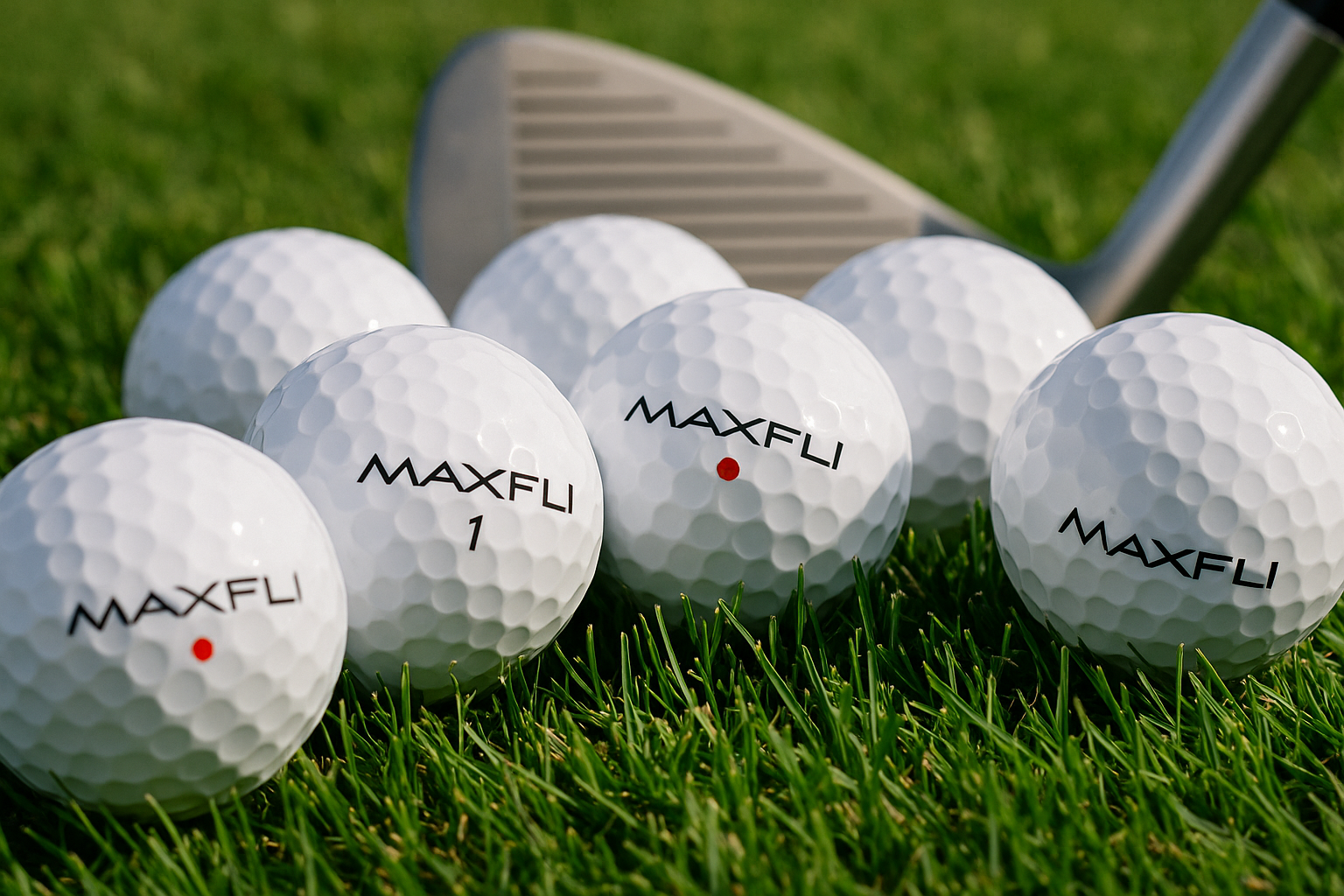
Maxfli golf balls deliver tour-level performance at mid-tier prices, making them a smart choice for players who want quality without the premium brand markup.
This review breaks down the Tour, Tour S, StraightFli, and SoftFli models, comparing compression, spin rates, distance, and durability to help you pick the right ball for your swing speed and playing style.
Key Takeaways
- Maxfli Tour (90 compression): best for 95+ mph swingers who want Tour-level spin and control around the greens
- Maxfli StraightFli (75 compression): designed to reduce slices and hooks, ideal for mid-handicappers with 85–100 mph swing speeds
- Maxfli SoftFli (35 compression): maximum distance and feel for seniors and moderate swing speeds below 90 mph
- All models cost significantly less than Titleist Pro V1 or TaylorMade TP5 while matching or exceeding performance in specific categories
- Durability varies: Tour models hold up for 3–4 rounds of competitive play, StraightFli and SoftFli for 4–6 rounds of recreational golf
Who Should Consider Maxfli Golf Balls
Maxfli targets the 80–90 percent of golfers who do not need the absolute highest spin rates of premium tour balls but still want measurable performance gains.
The brand works well for single-digit to mid-handicap players who prioritize value, recreational golfers upgrading from two-piece distance balls, and anyone testing different compression levels to match their swing speed.
The StraightFli line specifically suits players fighting a slice or hook, while the Tour models appeal to better ball-strikers who shape shots and demand greenside control.
SoftFli serves seniors, high-handicappers, and anyone with slower swing speeds who lose distance with firmer balls.
Maxfli Tour and Tour S Review
The Maxfli Tour is a four-piece urethane-covered ball with 90 compression, designed to compete directly with the Pro V1 and TP5.
It features a soft core for low-spin distance off the driver, a firm mantle layer for mid-iron control, and a thin urethane cover that grips wedge grooves for high spin on approach shots and chips.
Tour S drops to 75 compression with a slightly softer feel, targeting players with 90–100 mph driver swing speeds who want easier compression for more consistent distance.
Both models use a 318-dimple pattern to reduce drag and maintain a penetrating ball flight in wind.
Performance Breakdown
| Metric | Maxfli Tour | Maxfli Tour S |
|---|---|---|
| Compression | 90 | 75 |
| Driver spin (rpm) | 2400–2600 | 2500–2700 |
| 7-iron spin (rpm) | 6500–7000 | 6200–6800 |
| Wedge spin (56°, full swing) | 8500–9500 | 8200–9200 |
| Best for swing speed | 95+ mph | 85–100 mph |
The Tour delivers noticeably more greenside spin than the Tour S, especially on partial wedge shots and chips from tight lies. Players with 105+ mph driver speed report the Tour stays on line better in crosswinds and stops faster on firm greens.
The Tour S offers a softer feel at impact and slightly more forgiveness on mishits, making it the better choice for most single-digit handicappers.
Durability and Value
Urethane covers scuff faster than ionomer, and the Tour models show visible wear after 2–3 rounds of play on courses with cart paths and hardpan areas.
Wedge grooves mark the cover within 18 holes, though this does not significantly reduce spin performance until the cover shows deep cuts. Expect 3–4 rounds of competitive use before replacing.
At typical retail prices, Maxfli Tour costs 30–40 percent less than Pro V1 while delivering comparable distance and 85–90 percent of the greenside spin.
This makes it an excellent choice for players who lose multiple balls per round or want tour performance without the premium price.
Maxfli StraightFli Review
StraightFli is engineered to reduce side spin and keep hooks and slices in the fairway. The three-piece construction uses an ionomer cover (not urethane), a low-compression core (75 compression overall), and an asymmetric dimple pattern that stabilizes the ball’s flight path even when struck with an open or closed face.
How the Alignment Technology Works
Maxfli applies a visible alignment graphic on the cover and designs the core to resist tilting during flight.
When a player slices, the ball spins on an axis tilted to the right; StraightFli’s core and dimple design reduce that tilt angle by approximately 10–15 percent compared to standard two-piece balls, which translates to 5–10 yards less curve on a typical slice.
This is not a “fix” for poor swing mechanics, but it does buy you extra fairway width. Players with a 20-yard slice might see it drop to 12–15 yards, enough to stay in play on many holes.
Performance and Trade-Offs
StraightFli compression sits at 75, making it easy to compress for swing speeds between 85 and 100 mph. Driver distance matches or slightly exceeds the Tour S for most mid-handicappers because the lower spin reduces ballooning and adds roll.
The ionomer cover produces less wedge spin than urethane—expect 5500–6500 rpm on a 56-degree wedge versus 8000+ for the Tour—so the ball releases more on chips and pitches.
Greenside control is the trade-off: you gain straighter tee shots but lose some stopping power on approach shots. This is a net positive for players who miss fairways more often than greens.
Best For
- Mid-to-high handicappers (12–25) who fight a slice or hook
- Swing speeds 85–100 mph who want easier compression than a tour ball
- Players who prioritize keeping the ball in play over maximum greenside spin
- Courses with narrow fairways, heavy rough or severe hazards
Maxfli SoftFli Review
SoftFli is the lowest-compression option at 35, designed for seniors, beginners, and anyone with a driver swing speed below 90 mph.
The two-piece construction uses a large, soft core and a thin ionomer cover to maximize energy transfer and distance even with moderate clubhead speed.
Distance and Feel
At 35 compression, SoftFli compresses fully with slower swings, which means less energy lost at impact and higher ball speed compared to a firmer ball.
Players in the 75–85 mph swing speed range typically gain 5–10 yards of carry distance versus a 70- or 90-compression ball because the soft core rebounds faster off the face.
Feel is noticeably softer on putts and chips, though some better players find it too mushy and difficult to judge distance on lag putts.
The ball produces a quiet, muted click at impact rather than the crisp sound of a firmer model.
Spin and Control
SoftFli generates low spin off the driver (2200–2500 rpm), which helps slower swingers avoid pop-ups and get a flatter, more penetrating trajectory.
Iron spin is moderate (4500–5500 rpm with a 7-iron), and wedge spin is minimal (4000–5000 rpm), so the ball will release and roll more than a urethane-covered model.
This is the right ball for players who rarely spin the ball back on a green and need maximum carry distance more than stopping power.
Best For
- Swing speeds below 90 mph (driver)
- Seniors and players with slower swing speeds due to injury or flexibility
- High-handicappers (18+) who prioritize distance and a soft feel over spin control
- Recreational golfers who want an affordable, easy-to-hit ball for casual rounds
Comparison: Which Maxfli Golf Ball Is Best for You
| Model | Compression | Best Swing Speed | Cover | Spin Level | Best For |
|---|---|---|---|---|---|
| Tour | 90 | 95+ mph | Urethane | High | Low-handicappers who shape shots and need greenside control |
| Tour S | 75 | 85–100 mph | Urethane | Medium-high | Single-digit handicappers who want tour feel with easier compression |
| StraightFli | 75 | 85–100 mph | Ionomer | Low-medium | Mid-handicappers fighting a slice or hook who need straighter shots |
| SoftFli | 35 | Below 90 mph | Ionomer | Low | Seniors and slower swingers who need distance and a soft feel |
Decision Framework
Choose Maxfli Tour if your driver swing speed is 95+ mph, you regularly shoot in the 70s or low 80s, and you value the ability to work the ball and control spin on approach shots. The extra cost over Tour S is worth it for players who can consistently compress the ball and use the added spin.
Pick Tour S if you are a single-digit handicapper with 85–100 mph swing speed who wants tour performance without needing maximum compression. This is the sweet spot for most competitive amateurs.
Go with StraightFli if you lose more strokes off the tee due to slices or hooks than you do around the greens. The straighter flight and easier compression will help you find more fairways, even if you sacrifice some wedge spin.
Select SoftFli if your driver swing speed is below 90 mph or you prioritize distance and feel over spin. This is the best choice for seniors, high-handicappers and recreational players who do not generate enough speed to compress firmer balls.
How Maxfli Compares to Premium Tour Balls
Maxfli Tour and Tour S compete directly with Titleist Pro V1/Pro V1x, TaylorMade TP5/TP5x, and Callaway Chrome Soft.
In independent robot testing, Maxfli Tour matches or exceeds these balls in driver distance and comes within 5–10 percent on wedge spin.
The primary difference is durability: premium balls use slightly thicker urethane covers that resist scuffing for an extra round or two.
For most golfers, the performance gap does not justify the 30–40 percent price premium. If you play once or twice a week and lose 2–3 balls per round, Maxfli delivers better value.
Tour-level players and low-handicappers who rarely lose balls and play in competitive events may prefer the marginal gains and brand prestige of Pro V1 or TP5.
Where to Buy and Current Pricing
Maxfli golf balls are sold primarily through Dick’s Sporting Goods (which owns the Maxfli brand) and online retailers. Expect to pay the following per dozen:
- Maxfli Tour: $35–$40
- Maxfli Tour S: $35–$40
- Maxfli StraightFli: $25–$30
- Maxfli SoftFli: $20–$25
Watch for seasonal sales and multi-dozen discounts, which can drop the per-dozen price by 20–30 percent.
Refurbished and “mint” used Maxfli balls are widely available online at 40–60 percent off retail, though urethane-covered Tour models may show cover wear that affects spin performance.
Before committing to a full box, test a sleeve or single ball to confirm the compression and feel match your swing.
Many retailers and golf courses offer trial programs or single-ball sales. You can also visit a golf equipment store to test different models on a launch monitor and compare spin rates, ball speed, and launch angle before buying.
For more guidance on what to test before purchasing golf equipment, see our guide on what to test before buying at a golf equipment store.
Common Mistakes When Choosing a Golf Ball
Many golfers pick a ball based on brand or price alone, ignoring the compression and spin characteristics that actually affect performance.
Playing a 90-compression tour ball with an 85 mph swing speed means you are not compressing the core fully, which costs you distance and makes the ball feel hard and unresponsive.
Another mistake is overvaluing greenside spin. High-handicappers who rarely hit greens in regulation do not benefit from a high-spin urethane ball; they need distance and forgiveness off the tee more than stopping power on approach shots.
Finally, durability matters if you play frequently or on courses with cart paths and hard surfaces. A urethane-covered tour ball will scuff faster than an ionomer model, so budget-conscious players should factor in the cost per round, not just the cost per dozen.
Final Verdict: Best Maxfli Golf Balls for Different Players
Maxfli offers a well-designed lineup that covers the full range of swing speeds and skill levels.
The Tour and Tour S models deliver legitimate tour performance at a mid-tier price, making them the best value for single-digit handicappers and competitive amateurs.
StraightFli is the standout choice for mid-handicappers who lose strokes due to wayward drives, while SoftFli gives slower swingers the compression they need to maximize distance.
Test a sleeve of each model that matches your swing speed and playing style, then commit to a dozen once you confirm the feel and performance.
For most golfers, switching from a generic two-piece ball to the right Maxfli model will produce measurable improvements in distance, accuracy, or greenside control.
If you want to practice with your new balls at home, explore our resources on building a home practice setup and choosing the right training aids to refine your game year-round.
Check out how to build a home practice setup with Thrill Golf and our guide on golf blog resources to help you practice smarter.
Frequently asked questions
What is the compression of Maxfli StraightFli golf balls?
Maxfli StraightFli has a compression rating of 75, making it suitable for swing speeds between 85 and 100 mph. This mid-range compression allows the ball to compress fully for most amateur golfers while providing a balance of distance and feel.
Are Maxfli Tour golf balls as good as Pro V1?
Maxfli Tour delivers comparable distance and 85–90 percent of the greenside spin of Titleist Pro V1 at 30–40 percent lower cost. The main difference is durability: Pro V1’s thicker urethane cover resists scuffing for an extra round or two, but most golfers will not notice a performance difference during normal play.
Which Maxfli golf ball is best for seniors?
Maxfli SoftFli is best for seniors and players with swing speeds below 90 mph. Its 35 compression rating allows full compression with slower swings, maximizing distance and providing a soft feel on all shots. The low-spin design helps avoid pop-ups and produces a flatter, more penetrating ball flight.
Does Maxfli StraightFli really reduce slices?
Maxfli StraightFli reduces side spin by approximately 10–15 percent compared to standard two-piece balls, which translates to 5–10 yards less curve on a typical slice or hook. This is not a swing fix but does provide extra margin for error, helping keep more drives in the fairway on tight holes.
How long do Maxfli Tour golf balls last?
Maxfli Tour and Tour S urethane-covered balls typically last 3–4 rounds of competitive play before showing significant scuffing or cover damage. StraightFli and SoftFli ionomer-covered models last longer, usually 4–6 rounds, because ionomer is more durable than urethane and resists cuts and abrasions better.
What is the difference between Maxfli Tour and Tour S?
Maxfli Tour has 90 compression and is designed for swing speeds above 95 mph, delivering maximum greenside spin and control. Maxfli Tour S has 75 compression, making it easier to compress for 85–100 mph swing speeds, with a softer feel and slightly less spin but more forgiveness on mishits.